

Tribulus terrestris shows the most consistent human evidence for libido and mild erectile dysfunction, at doses studied commonly in the range of a few hundred milligrams to around a gram daily for one to three months. It does not reliably raise testosterone in healthy adults, and results for athletic performance are mostly flat. A handful of small trials in people with type 2 diabetes suggest modest blood sugar and cholesterol improvements. Side effects are usually mild, but liver disease and certain medications call for a conversation with your doctor first.
TL;DR:
- Tribulus is most reliably effective for improving erectile function in men with mild to moderate erectile dysfunction, typically at doses of 400 to 750 mg daily for one to three months.
- Its impact on testosterone levels in healthy adults remains unproven, with most high-quality studies showing no consistent hormonal increase despite subjective feelings of increased energy or libido.
- Athletic performance and muscle-building benefits are minimal or unsupported by controlled trials, with no significant gains in strength or body composition observed at realistic doses.
- Blood sugar and cholesterol improvements have been observed in small studies of diabetic women taking around 1,000 mg daily, but these results require further validation.
- Product quality and formulation matter; only standardized extracts with clear saponin content and third-party testing are likely to produce the benefits shown in clinical research.
Table of Contents
- What Is Tribulus Terrestris and How Is It Sold?
- Does Tribulus Help Libido and Sexual Function?
- Testosterone and Hormones: What the Trials Actually Show
- Athletic Performance, Recovery, and Body Composition
- Blood Sugar and Cholesterol: A Small but Interesting Signal
- The Biology Behind Tribulus: Saponins and Protodioscin
- How Much Tribulus Should You Take, and What Does the Label Mean?
- Is Tribulus Safe? Side Effects and Drug Interactions
- Contamination Risk: Why Product Quality Determines Real-World Results
- Our Take: Tribulus Is a Reasonable Bet for Some Goals, Not Others
- Which Organicufuel Product Fits Your Goal?
- Sources
- FAQ
What Is Tribulus Terrestris and How Is It Sold?
Tribulus terrestris is a spiny, low-growing weed found across warm climates worldwide, known by the common names puncture vine and goat’s head, thanks to the sharp burrs its seed pods produce. Traditional medicine systems in India, China, and the Mediterranean have used it for centuries, mostly for urinary and reproductive complaints. Modern supplement makers extract compounds from the fruit, leaf, or root and sell them under a single umbrella name, even though those plant parts contain meaningfully different chemical profiles.
You’ll typically find tribulus in one of a few forms on store shelves:
- Whole-plant or fruit powder, sold in capsules with a flat milligram dose and no saponin percentage listed
- Standardized extracts, which list a guaranteed percentage of saponins, the compound class believed to drive most effects
- Combination formulas, where tribulus is stacked with other herbs like fenugreek, maca, or ashwagandha under a broader “testosterone support” or “male vitality” label
Marketers commonly attach four claims to tribulus: better libido and sexual performance, higher testosterone, improved athletic output, and metabolic support for blood sugar or cholesterol. As the rest of this guide breaks down, only the first claim holds up with any consistency in human trials, and even that comes with real caveats about who benefits and how much.
Does Tribulus Help Libido and Sexual Function?
This is where the evidence for tribulus benefits is genuinely strongest, though still far from a guarantee. A systematic review of clinical trials found that tribulus supplementation, generally in the 400 to 750 mg per day range taken for one to three months, improved erectile function in men with mild to moderate erectile dysfunction. That’s a meaningfully narrower claim than “boosts sex drive for everyone,” and it’s worth sitting with that distinction before assuming tribulus will work the same way for a healthy 28-year-old as it did for a 55-year-old trial participant with diagnosed ED.
Trial snapshot: Reported benefit doses across studies cluster between 500 and 1,500 mg per day, with most positive results showing up somewhere between four and twelve weeks of consistent use.
A few things explain why results vary so much between trials:
- Product formulation differs wildly. One study’s extract might carry double the saponin content of another’s, even at the same milligram dose.
- Who’s being studied matters. Men already dealing with low libido or diagnosed ED tend to show more improvement than healthy volunteers with no baseline complaint.
- Subjective measures dominate. Many trials rely on self-reported satisfaction scores rather than objective physiological markers, and reviews of tribulus’s traditional and pharmacological uses note that subjective sexual improvement can occur independent of any measurable hormone shift.
If you’re generally healthy and just curious whether tribulus might add a little spark, a measured trial period makes sense. If you’re dealing with persistent erectile dysfunction, low sexual desire that’s affecting your relationship or mood, or symptoms that showed up suddenly, that’s a signal to talk to a doctor rather than self-treat. ED is sometimes an early marker of cardiovascular or metabolic issues, and a supplement won’t catch that.
Testosterone and Hormones: What the Trials Actually Show
Here’s the claim that gets overpromised more than any other: that tribulus raises testosterone. Most well-designed human studies don’t back it up. A widely cited evidence review of tribulus terrestris concludes that quality trials in healthy adults generally fail to show a reliable, consistent increase in total testosterone, even when subjects report feeling more energetic or interested in sex.
That gap between “feels better” and “hormones changed” is one of the more interesting quirks in supplement research. Animal studies, particularly in rodents, have shown testosterone increases with tribulus extracts. Human physiology doesn’t seem to respond the same way, at least not at the doses and durations tested so far.
A few patterns show up repeatedly in the research:
- Small or mixed-design trials sometimes report modest hormonal shifts, but sample sizes are often too small to draw firm conclusions, and results don’t replicate consistently across labs.
- Combination products muddy attribution. When tribulus is stacked with fenugreek, zinc, or D-aspartic acid, any measured testosterone change can’t be pinned on tribulus alone.
- Placebo and expectation effects are real. Men who believe they’re taking a testosterone booster frequently report subjective improvements in energy, mood, and libido regardless of what’s actually in the capsule.
If your goal is a documented testosterone boost, tribulus isn’t the ingredient the current evidence supports. A supplement built around ingredients with more direct hormonal research behind them, like the formulation in BioSync-XT, is a more targeted starting point if testosterone support specifically is what you’re after.
Athletic Performance, Recovery, and Body Composition
Gym marketing loves tribulus, but the trial data tells a quieter story. A six-week randomized, placebo-controlled study gave CrossFit-trained men 770 mg per day and tracked body composition, hormonal response, perceived exertion, and workout performance. The result: no significant improvement across most measures. A couple of isolated data points, like a bench press metric and a testosterone trend, moved slightly, but the researchers themselves flagged those as inconsistent rather than a clear signal.
That single study lines up with the broader pattern in sports nutrition research:
- No reliable strength gains have been demonstrated across controlled trials using realistic training-relevant doses.
- Body composition stays largely unchanged, meaning tribulus hasn’t shown itself to be a fat-loss or muscle-building agent on its own.
- Perceived exertion and recovery markers haven’t shown consistent improvement either, despite anecdotal claims from lifters.
If you’re chasing measurable strength or muscle gains, tribulus isn’t a proven ergogenic aid in most human trials. It might have a place in a stack aimed at libido or general vitality, but treat any “boosts performance” claim on a label with real skepticism.
Blood Sugar and Cholesterol: A Small but Interesting Signal
This is the most underdiscussed of the tribulus benefits, mostly because the evidence base is thin. A trial giving 1,000 mg per day to 98 women with type 2 diabetes found improved blood sugar and cholesterol markers compared with placebo. That’s a genuinely interesting result, but it comes from one population, one dose, and a study size that’s too small to generalize confidently.
A few caveats matter here:
- Sample size and single-study limitations mean this finding needs replication before anyone calls it established.
- Extract differences between studies make it hard to know whether the specific formulation used in that trial would perform the same way in a different product.
- Metabolic benefit doesn’t equal medical treatment. Tribulus supplement effects on glucose or lipids, even if reproducible, wouldn’t substitute for prescribed diabetes medication or monitoring.
If you’re managing type 2 diabetes or taking glucose-lowering medication and you’re curious about tribulus, the responsible move is bringing it up with your prescribing doctor first, especially because combining a glucose-affecting supplement with insulin or sulfonylureas raises the risk of blood sugar dropping too low.
The Biology Behind Tribulus: Saponins and Protodioscin
The active compounds behind most tribulus benefits are steroidal saponins, a class of plant chemicals that include spirostanol and furostanol types. The compound most frequently cited in tribulus research is protodioscin, a furostanol saponin believed to be responsible for much of the plant’s biological activity.
Researchers have proposed a few mechanisms for how protodioscin and related saponins might work:
- Modulating luteinizing hormone (LH), which in theory could support downstream testosterone production, though human trial results haven’t consistently confirmed this pathway translates into measurable hormone change.
- Supporting nitric oxide and endothelial function, a pathway that plausibly connects to improved blood flow and erectile response.
- Antioxidant and anti-inflammatory activity, which shows up in lab and animal studies but is harder to isolate as a driver of the human trial outcomes discussed above.
None of this is settled science. A comprehensive phytochemical review of Tribulus terrestris points out that saponin concentration varies enormously depending on which part of the plant is used, where it’s grown, and how it’s extracted. That variability is probably the single biggest reason tribulus research produces such inconsistent results from one trial to the next: two “tribulus” products can be chemically quite different from each other.
How Much Tribulus Should You Take, and What Does the Label Mean?
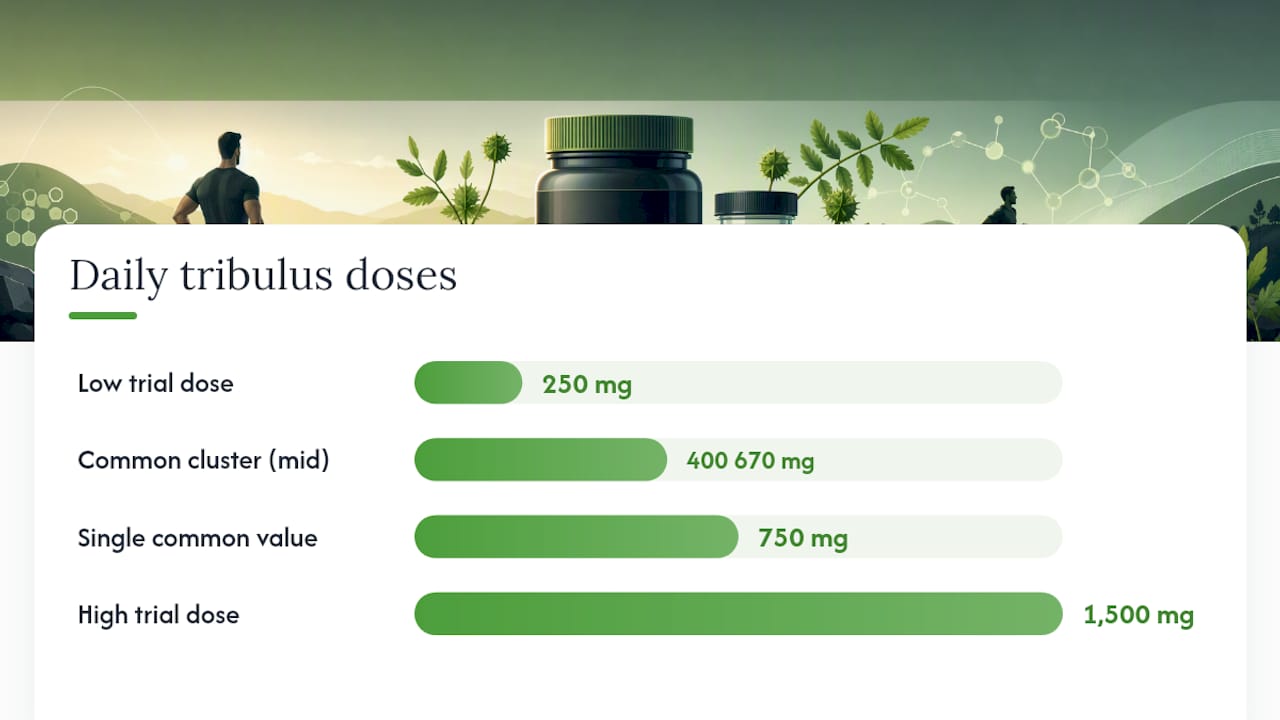
Clinical trials showing benefit have generally used doses somewhere between 250 and 1,500 mg per day, with a cluster of studies landing on 400 to 770 mg or 750 mg daily, taken for one to three months before assessing results. That range is wide enough that a single number on a bottle doesn’t tell you much without also knowing the saponin percentage.
Here’s how to actually make sense of a label:
- Check for a standardized saponin percentage. Concentrated extracts commonly advertise 45% to 60% saponin content; a product with no percentage listed is likely a raw powder with much lower and less predictable potency.
- Do the math on active compound dose. A 500 mg capsule standardized to 45% saponins delivers roughly 225 mg of saponins, while a 500 mg capsule at 60% delivers about 300 mg, a meaningful difference even at the same total dose.
- Match the dose to the trial range. If a product’s total daily saponin delivery falls well outside the ranges used in studies showing benefit, expectations should adjust accordingly.
- Give it real time. Most positive trial results took four to twelve weeks to show up. Judging tribulus after five days is judging it before it’s had a fair shot.
Pro Tip: Write down your starting point before you begin, whether that’s a libido self-rating, a resting energy level, or a lab value your doctor tracks. Without a baseline, it’s almost impossible to tell a real change from wishful thinking eight weeks later.
Is Tribulus Safe? Side Effects and Drug Interactions
Most people tolerate tribulus reasonably well at typical supplement doses. The most commonly reported side effects across trials are mild gastrointestinal upset, nausea, and occasional dizziness, generally resolving on their own or with a lower dose.
Liver caution: The LiverTox database entry on tribulus notes that the plant has caused serious, sometimes fatal liver injury in grazing livestock, but convincing evidence of clinically significant liver injury in humans at typical supplement doses is limited. Caution is still warranted for anyone with existing liver disease.
A few more safety points worth knowing before you start:
- Anticoagulant interaction risk. Because of tribulus’s effects on blood flow and platelet activity in some studies, combining it with blood thinners deserves medical oversight.
- Hormone-sensitive conditions. People with prostate cancer, breast cancer, or other hormone-sensitive diagnoses should discuss any hormonally active supplement with their oncologist before use.
- Pregnancy and breastfeeding. There isn’t enough safety data to recommend tribulus during pregnancy or while nursing, so it’s best avoided.
- When to stop. Persistent stomach pain, unusual fatigue, dark urine, or yellowing skin or eyes warrant stopping the supplement and seeing a doctor promptly, since those can be early liver-related warning signs.
Contamination Risk: Why Product Quality Determines Real-World Results
The male-enhancement supplement category has a documented contamination problem. Consumer-health reporting has flagged products marketed for male enhancement that tested positive for undeclared steroids or hormonal substances not listed on the label, sometimes explaining “results” that had nothing to do with the herbal ingredients on the front of the bottle.
A short checklist protects you here:
- Look for a third-party Certificate of Analysis (COA) confirming saponin content and screening for banned substances.
- Confirm GMP certification and manufacturing transparency, ideally with a stated country of origin for raw materials.
- Compare the listed saponin percentage against trial ranges rather than trusting milligram totals alone.
- Favor brands that publish batch-level testing rather than a single generic quality claim.
Pro Tip: If a male-enhancement product promises rapid, dramatic results within days, treat that as a red flag rather than a selling point. Legitimate herbal extracts, tribulus included, work gradually, if they work at all.
Some companies formulate their supplements with lab testing performed in the US, GMP-certified manufacturing, and clearly listed ingredient sourcing to ensure quality, addressing concerns about cutting corners in this category.
Our Take: Tribulus Is a Reasonable Bet for Some Goals, Not Others
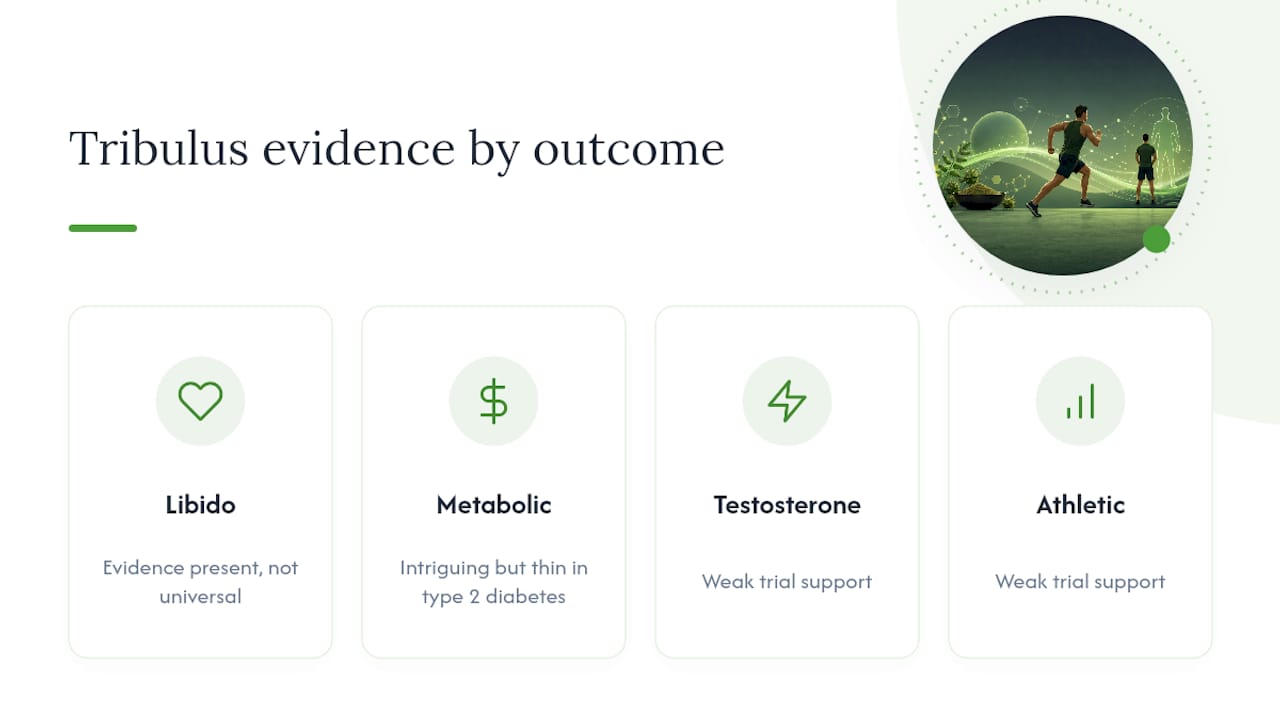
Tribulus earns a place in a well-considered supplement routine, but only if you’re honest about which tribulus benefits the research actually supports. The libido and mild sexual dysfunction data is real, even if it’s not universal. The metabolic signal in diabetes patients is intriguing but thin. The testosterone and athletic performance claims that dominate marketing copy are the weakest part of the story, and no amount of persuasive label copy changes what the trials show.
What separates a product that might work from one that’s a waste of money usually comes down to formulation, not marketing. A tribulus extract with no stated saponin percentage, sourced from an unverified supplier, isn’t the same product that showed up in the clinical trials cited throughout this guide. That’s exactly why Organicufuel treats extract standardization and third-party testing as non-optional steps, not selling points added after the fact.
If you’re dealing with persistent sexual dysfunction, a metabolic diagnosis like type 2 diabetes, or you’re on medication that could interact with an herbal supplement, loop in your doctor before starting anything, tribulus included. Supplements work best as one part of a plan a clinician already knows about.
— Organic
Which Organicufuel Product Fits Your Goal?
Organicufuel exists because most tribulus products on the market skip the standardization and testing steps that made the clinical trials in this guide actually work. Formulas may be lab tested in the US, manufactured under GMP certification, and sometimes backed by a money-back guarantee, helping reduce the risk of purchasing unverified powders with no saponin percentage listed.
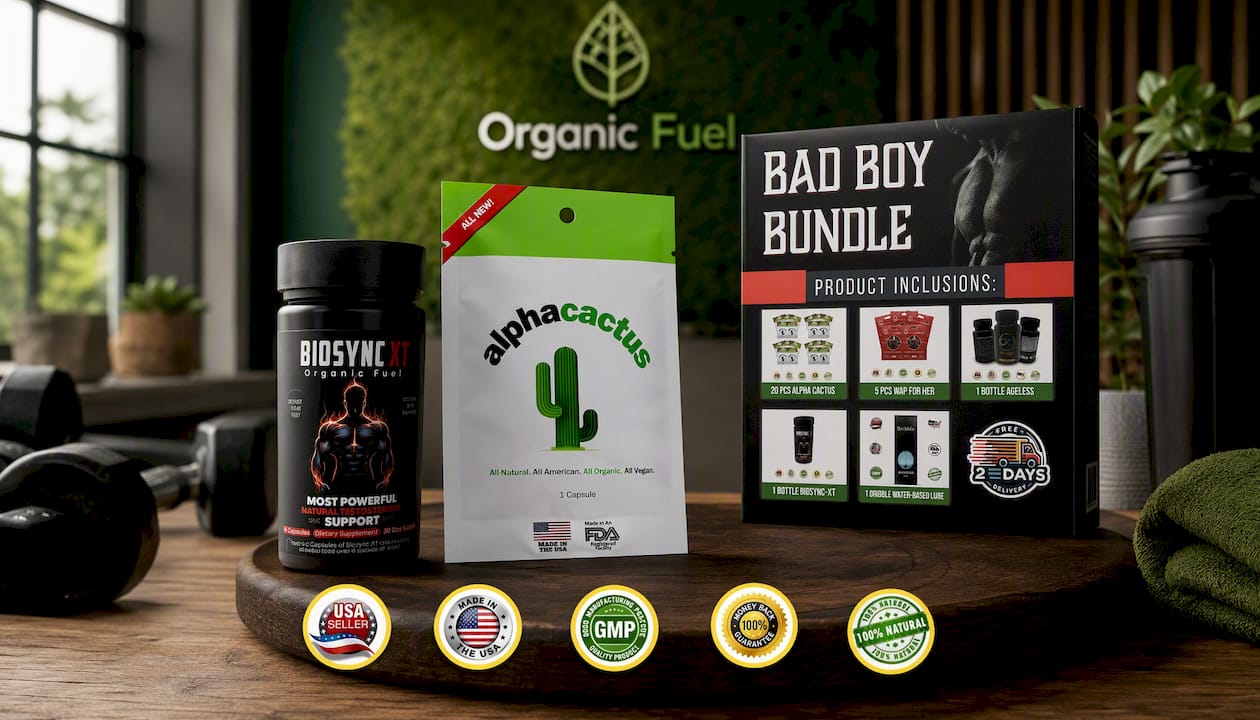
If testosterone support is your primary goal, BioSync-XT is built around ingredients selected for that specific purpose rather than a vague “male vitality” blend. If sexual performance and stamina are what you’re after, Alpha Cactus combines herbal ingredients formulated for that use case, drawing on the same category of evidence discussed above around libido and erectile function. And if you want both areas covered without piecing together two separate orders, the Bad Boy Bundle pairs the two formulas at a combined price.
Start by identifying which outcome matters most to you right now, then check the product page for that formula’s full ingredient list and dosing details before you order.
This article is general information, not a substitute for advice from a qualified doctor. Consult a qualified healthcare professional about your own circumstances before acting on anything here.
Sources
- Effects of Tribulus (Tribulus terrestris L.) Supplementation on Erectile Dysfunction and Testosterone Levels in Men—A Systematic Review of Clinical Trials
- Does Tribulus Terrestris Really Work? An Evidence-Based Look
- Tribulus - LiverTox - NCBI Bookshelf
- A Comprehensive Review of the Phytochemical, Pharmacological, and Toxicological Properties of Tribulus terrestris L.
FAQ
What does tribulus do to men?
In human trials, tribulus most consistently improves subjective libido and erectile function in men with mild to moderate ED, generally at 400 to 750 mg per day for one to three months. It does not reliably raise testosterone in healthy men.
Is it okay to take tribulus every day?
Daily use matches how most clinical trials were designed, typically for four to twelve weeks, and mild gastrointestinal side effects are the most common issue reported. People with liver disease or those on blood thinners should check with a doctor first.
Is ashwagandha better than tribulus?
They target different things: ashwagandha has stronger evidence for stress and cortisol reduction, while tribulus has more targeted evidence for libido and mild erectile dysfunction. Neither has reliable human evidence for raising testosterone in healthy adults.
How long does it take for tribulus to kick in?
Trials showing benefit generally ran for four to twelve weeks before measuring results, so a fair trial period means sticking with a consistent dose for at least a month before judging whether it’s working.


Comments (0)
There are no comments for this article. Be the first one to leave a message!