
The most reliable way to increase stamina naturally is combining consistent aerobic and strength training with 7 to 9 hours of sleep, steady carbohydrate and protein intake, real hydration, and stress control, then layering in a few evidence-backed supplements. Follow this pattern and most people notice less daily fatigue within 2 to 4 weeks and real endurance gains by 8 to 12 weeks. See a clinician first if you have heart disease, chronic fatigue, or if you are starting new medications.
TL;DR:
- Consistent aerobic and strength training combined with proper sleep, hydration, and stress management are essential for noticeable stamina improvements within 8 to 12 weeks.
- Training should include three weekly Zone 2 cardio sessions, one to two HIIT workouts after four weeks, and muscle endurance exercises using high-rep compound lifts.
- Food intake must prioritize complex carbohydrates, protein, and nitrate-rich vegetables, with regular eating every three to four hours to maintain steady energy levels.
- Supplements like L-citrulline and dietary nitrate can support blood flow and fatigue resistance but should be used only after optimizing sleep, diet, and training habits.
- Stable progress depends on tracking resting heart rate, consistent sleep routines, breathing techniques, pacing strategies, and consulting a medical professional if persistent fatigue occurs.
Table of Contents
- 7 Things to Try in the Next 72 Hours
- How Do You Build an Aerobic Base and Muscular Endurance?
- What Should You Eat to Fuel Sustained Energy?
- Which Natural Supplements Actually Have Evidence Behind Them?
- Why Sleep and Stress Control Decide How Much Energy You Actually Have
- How Do Breathing and Pacing Techniques Delay Fatigue?
- How Long Does It Take to See Real Stamina Gains?
- What We’d Actually Tell a Friend Trying to Fix Their Energy
- Where Alpha Cactus, Ageless For Men, and Bad Boy Bundle Fit In
- Sources
7 Things to Try in the Next 72 Hours
You don’t need a complete lifestyle overhaul to feel a difference this week. Small, correctly sequenced actions compound fast, especially when your baseline habits have been sloppy for a while.
- Lock your sleep window. Aim for 7 to 9 hours, and stop vigorous exercise at least one hour before bed so your nervous system can actually wind down.
- Take a 20 to 30 minute brisk walk or easy jog today. This is your first Zone 2 dose. It should feel comfortably hard, not exhausting.
- Eat a small carb and protein snack 60 to 90 minutes before activity. Think a banana with peanut butter, not a candy bar.
- If you use beetroot juice or caffeine, time it. Beetroot works best about 2 to 3 hours before exercise; caffeine, 30 to 60 minutes before.
- Hit your hydration target. Roughly half your body weight in ounces of water daily, with an electrolyte drink added on hard training or hot days.
- Practice two minutes of diaphragmatic breathing. Slow inhales through the nose, longer exhales through the mouth.
- Try one round of pelvic-floor contractions. Ten slow squeezes, hold for five seconds each, three times today.
Stop and call a doctor if you experience chest pain, unexplained shortness of breath, or fainting during any of this. Those are not stamina problems.
How Do You Build an Aerobic Base and Muscular Endurance?
Real stamina gains come from three training pillars working together: an aerobic base, muscular endurance, and, for many people, pelvic-floor control. Skip any one of them and progress stalls.
Zone 2 training is steady effort at roughly 50 to 70% of your maximum heart rate, where you can hold a conversation but wouldn’t want to sing. It builds mitochondrial density and the aerobic engine that stamina training depends on. A practical weekly structure looks like this:
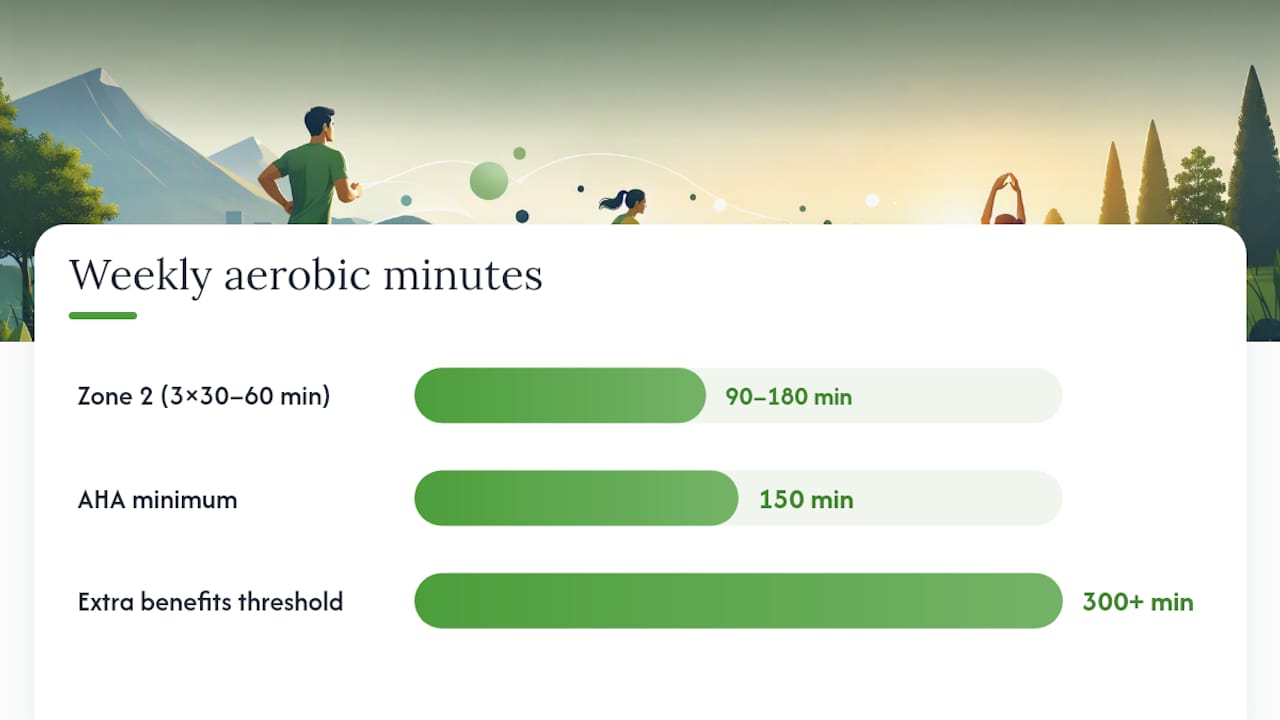
- Three sessions of 30 to 60 minutes of Zone 2 cardio (walking, cycling, swimming).
- One to two HIIT sessions once your base is solid, usually after 3 to 4 weeks.
- Two strength or muscular-endurance sessions using compound lifts at higher reps (12 to 20).
The American Heart Association sets a floor of 150 minutes of moderate aerobic activity weekly, with extra benefits showing up past 300 minutes. Increase any single variable, duration, intensity, or frequency, by about 10% per week rather than jumping around, which follows the progressive overload principle that keeps injury risk low while still forcing adaptation.
For sexual stamina specifically, pelvic-floor training matters more than most people realize. Contract the muscles you’d use to stop urination midstream, hold for 5 to 10 seconds, release, and repeat for three sets of 10. Do this daily; most men and women notice better control within 4 to 6 weeks.
Warm up for 5 to 10 minutes before any session, cool down with light movement afterward, and take at least one full rest day weekly.
Pro Tip: Track resting heart rate each morning. A steady drop over several weeks is one of the clearest signs your aerobic base is actually improving.
What Should You Eat to Fuel Sustained Energy?
Food timing matters almost as much as food choice. Complex carbohydrates, oats, brown rice, sweet potatoes, whole-grain bread, are your primary fuel source because they release glucose steadily instead of spiking and crashing it.
Practical fueling habits that make a measurable difference:
- Eat every 3 to 4 hours; pairing protein with fruit or vegetables at each meal steadies blood sugar and prevents afternoon slumps.
- Prioritize protein (chicken, fish, eggs, legumes) for muscle repair, roughly 20 to 30 grams per meal.
- Get your iron and B12 checked if you feel unusually winded during easy activity; low iron is one of the most overlooked causes of poor stamina, especially in women.
- Drink water consistently through the day, and reach for an electrolyte drink only during longer or sweatier sessions, not as a daily default.
- Eat nitrate-rich foods like beetroot and leafy greens (spinach, arugula) regularly; they support the same nitric-oxide pathway that boosts blood flow during exertion.
- Skip the energy-drink habit. Stimulants mask fatigue without fixing the vascular or mitochondrial issues actually driving it, which is why a food-first, multi-mechanism approach outperforms caffeine alone over time.
Which Natural Supplements Actually Have Evidence Behind Them?
Supplements are adjuncts, not shortcuts. They work best once sleep, training, and nutrition are already dialed in, not as a substitute for them.
- L-citrulline: Study doses of 6 to 8 grams taken about 60 minutes pre-exercise improve nitric-oxide-mediated blood flow and can extend time-to-exhaustion in several trials, though individual response varies.
- Beetroot or dietary nitrate: Roughly 300 to 600 mg nitrate equivalents, timed 2 to 3 hours before activity, lowers the oxygen cost of exercise. Caution: it can lower blood pressure, so check with your doctor if you’re on BP medication or a PDE‑5 inhibitor.
- Cordyceps: Trial doses of 1 to 3 grams daily over 2 to 6 weeks show improvements in aerobic performance and fatigue resistance in some studies, though results are mixed across trials. If you’d rather work it into your routine casually, cordyceps mushroom coffee is a common consumer entry point.
- Rhodiola and NAD+ precursors (niacin, NR): Evidence is preliminary but promising for fatigue resistance; watch for flushing with niacin and don’t exceed labeled doses without medical guidance.
Key figure: In the reviewed trials, 6 to 8 grams of L-citrulline pre-exercise was the most consistently studied dose for improving blood flow and delaying fatigue.
Before starting anything, get a baseline check with your doctor, review medication interactions, and choose third-party-tested products starting at the low end of the dose range.
Why Sleep and Stress Control Decide How Much Energy You Actually Have
Most stamina problems trace back to two things nobody wants to fix: bad sleep and chronic stress. You can train perfectly and still feel depleted if either one is broken.
Adults need 7 to 9 hours of quality sleep nightly for real energy regulation and muscle recovery. A few sleep-hygiene rules matter more than any supplement:
- Keep a consistent sleep and wake time, even on weekends.
- Dim lights and avoid screens for 30 to 60 minutes before bed.
- Finish vigorous exercise at least an hour before you turn in.
- Keep your bedroom cool and dark.
Chronic stress keeps cortisol elevated, which drains the same energy reserves your muscles and libido depend on. Ten minutes of daily mindfulness, scheduled screen-free breaks, and moderate movement (a walk counts) blunt that cortisol response over time. Recovery days matter here too: light activity and adequate protein intake on rest days speed the repair that stamina gains actually depend on.
How Do Breathing and Pacing Techniques Delay Fatigue?
Breathing mechanics and pacing are the fastest tools in this entire plan, and the most underused. Practice diaphragmatic breathing daily: inhale through the nose for four counts, letting your belly expand, then exhale for six counts through the mouth. Five minutes a day builds the habit.
- During activity, shift attention rhythmically, count breaths, notice your stride, glance at a fixed point, to delay the mental fatigue that often arrives before the physical kind.
- Use paced, slower breathing (a Buteyko-style approach) during warm-ups to train tolerance for mild breathlessness.
- Insert micro-rests, 10 to 15 seconds, during longer efforts instead of pushing through discomfort at a constant pace.
These techniques pair directly with the training and nutrition steps above; better breath control lets you sustain a Zone 2 heart rate longer with less perceived effort.
How Long Does It Take to See Real Stamina Gains?
Progress follows a fairly predictable timeline if you’re consistent. Expect less daily fatigue within 2 to 4 weeks, measurable cardio improvement by 6 to 8 weeks, and noticeable endurance and sexual stamina gains for many people by 8 to 12 weeks.
- Track resting heart rate weekly; a downward trend signals real aerobic adaptation.
- Log perceived exertion and time-to-fatigue during your longest weekly session.
- Keep a simple journal for sexual stamina changes if that’s a goal, noting frequency and confidence, not just duration.
See a clinician if fatigue persists despite these changes. It’s often iron deficiency, undiagnosed sleep apnea, or a cardiac issue that no amount of training will fix on its own.
What We’d Actually Tell a Friend Trying to Fix Their Energy
Sequence matters more than most people admit. Fix sleep, training consistency, and food timing first. Supplements only earn their keep once those basics are already working, and Organicufuel’s own lab-tested formulas, backed by a money-back guarantee, are built to support that foundation rather than replace it. Follow the plan for a full 8 to 12 weeks before judging results, and loop in a clinician if anything about your fatigue feels off rather than just inconvenient.
— Organic
Where Alpha Cactus, Ageless For Men, and Bad Boy Bundle Fit In
Once your sleep, training, and nutrition are actually consistent, a targeted adjunct can close the remaining gap faster than willpower alone. Alpha Cactus is built around herbal ingredients tied to blood flow and sexual vitality, positioned for the exact nitric-oxide pathway discussed above. Ageless For Men targets broader vitality and stamina support for men noticing an age-related dip in drive and endurance.
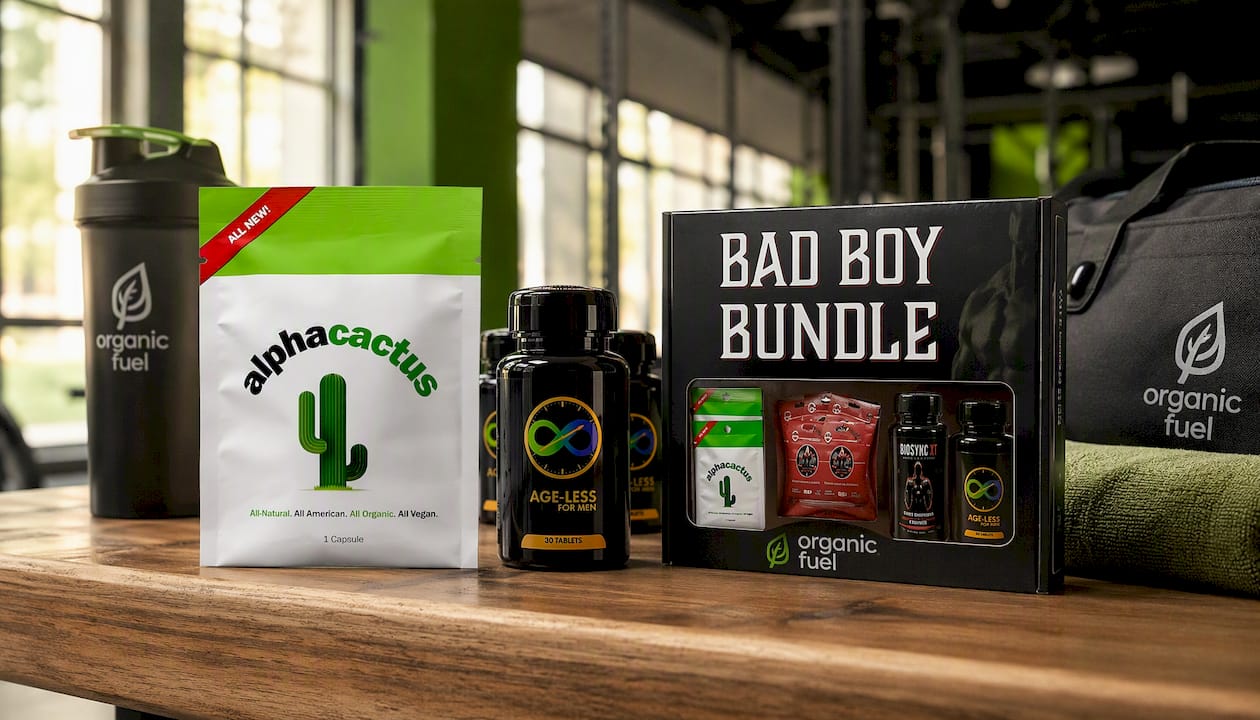
If you want both angles covered at once, the Bad Boy Bundle pairs performance and stamina support into a single routine instead of juggling separate bottles. Start with the product that matches your biggest gap, whether that’s drive, endurance, or general vitality, and give it the same 8 to 12 week window you’d give any training program before judging results.
Sources
For readers who want to verify the numbers here directly: the AHA’s physical activity guidelines cover weekly aerobic targets, Mayo Clinic Press breaks down sleep and food-based energy strategies, the Frontiers narrative review covers L-citrulline, nitrate, and cordyceps dosing evidence, and Planet Fitness’s progressive overload guide explains safe training progression in more detail.
This article is general information, not a substitute for advice from a qualified doctor. Consult a qualified healthcare professional about your own circumstances before acting on anything here.
- AHA recommendations for physical activity in adults
- Natural ways to boost energy without caffeine — Mayo Clinic Press
- Synergistic actions of natural compounds for enhancing cognitive and physical performance: a narrative review — Frontiers (2026)
- Progressive overload beginners guide — Planet Fitness


Comments (0)
There are no comments for this article. Be the first one to leave a message!