
For most healthy adults, nitric oxide supplements are safe when used at the doses studied in research and without conflicting medications. They are not risk-free, though. Anyone with a recent heart attack, low blood pressure, liver disease, or a prescription for nitrates or ED medication should talk to a clinician first, and chest pain, fainting, or severe dizziness means stop and get medical help right away.
TL;DR:
- Most healthy adults can take nitric oxide precursors safely at studied doses, but those with heart conditions or on certain medications should consult a doctor first.
- The effectiveness and safety of supplements depend on ingredient purity and dosage, with proprietary blends often hiding potentially risky stimulant amounts.
- Side effects are usually mild and digestive, but serious symptoms like chest pain or fainting require immediate medical attention.
- Individual responses vary due to differences in enzyme conversion, kidney function, and gut bacteria, making personalized monitoring important.
- Proper use includes starting with low doses, choosing transparent brands, and avoiding stacking multiple precursors without medical guidance.
Table of Contents
- What Nitric Oxide Supplements Actually Are
- Common Ingredients: L-Arginine, L-Citrulline, and Beetroot Nitrate
- How Much Is Too Much? What the Dosage Research Shows
- Nitric Oxide Booster Side Effects You’re Likely to Notice
- Who Should Avoid Nitric Oxide Supplements and Drug Interactions to Know
- A Practical Checklist for Using Nitric Oxide Supplements Safely
- Organic Fuel’s Approach to Safety and Transparency
- Balancing Performance Goals With Safety
- Try Organic Fuel’s Lab-Tested Formulas for Yourself
- Sources
What Nitric Oxide Supplements Actually Are
Nothing on a supplement shelf actually contains nitric oxide. The gas is unstable and reactive, so what you’re buying is a precursor: L-arginine, L-citrulline, or dietary nitrates from beetroot, which your body converts into nitric oxide through separate enzyme pathways.
That distinction matters more than most marketing admits. Inhaled nitric oxide is a controlled medical gas, delivered through ventilators to treat conditions like neonatal pulmonary hypertension, with dosing measured in parts per million and monitored continuously by clinical staff. An oral supplement works nothing like that. It relies on your liver and vascular tissue to do the conversion, at a pace and efficiency that varies by person, kidney function, and even gut bacteria.
The side-effect profile of a nitric oxide supplement traces back to its precursor, not to nitric oxide itself. Arginine causes different gut reactions than citrulline. Beetroot nitrate behaves differently than either amino acid. Asking “is nitric oxide safe” is really asking three or four separate questions about three or four separate ingredients, each with its own evidence base and its own risks.
Common Ingredients: L-Arginine, L-Citrulline, and Beetroot Nitrate
Walk down the pre-workout aisle and you’ll see the same handful of ingredients dressed up under different brand names.
- L-arginine: the original nitric oxide precursor, studied for decades, but a meaningful chunk of an oral dose gets broken down in the gut before it ever reaches the bloodstream.
- L-citrulline: converted to arginine in the kidneys, bypassing that gut breakdown, which is why it often raises plasma arginine levels more efficiently than taking arginine directly.
- Beetroot extract and dietary nitrates: convert to nitric oxide through a completely different pathway involving oral bacteria, and they’re the ingredient behind the harmless red tint some people notice later.
- Proprietary pre-workout blends: combine several of the above with stimulants, and the label often won’t tell you exactly how much of each ingredient you’re getting.
That last point is where safety questions get complicated. Blended formulas hide individual dosages behind a single “proprietary blend” weight, and some pre-workout products have turned up with undeclared stimulants or inconsistent dosing between batches. A single-ingredient citrulline capsule is a very different safety proposition than a stimulant-loaded blend marketed for a gym pump.
How Much Is Too Much? What the Dosage Research Shows
Ask ten supplement labels for a dosage and you’ll get ten different answers, because there isn’t an official one. Nitric oxide precursors fall under dietary supplement law in the United States, which means no agency sets a standardized recommended dose the way one exists for, say, an FDA-approved drug.
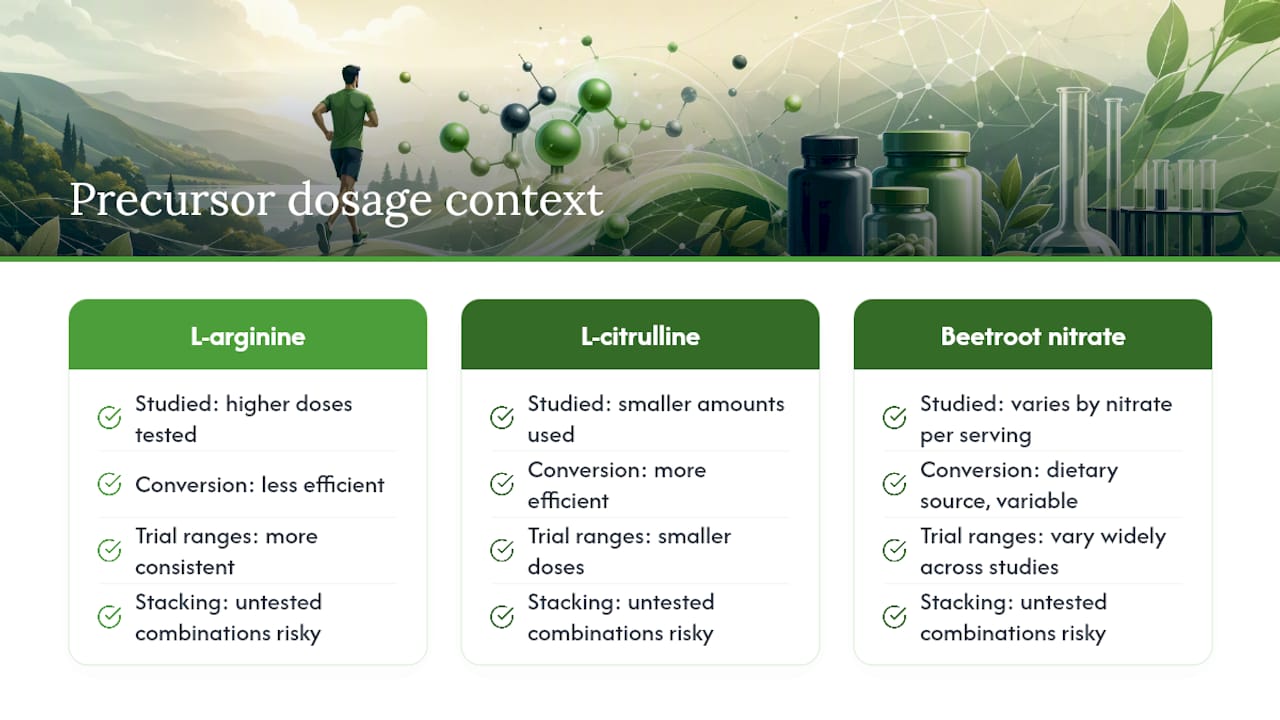
That gap gets filled by clinical trial data instead. Clinical trial data shows doses of L-arginine that have been studied for nitric oxide supplementation are generally well tolerated in healthy adults. Citrulline studies often use smaller amounts because of its more efficient conversion. Beetroot juice trials vary widely depending on nitrate concentration per serving, which makes cross-study comparison messy at best.
Here’s the practical problem: a lot of commercial products land nowhere near those studied ranges. Some underdose relative to what trials used, which just means you’re paying for a weaker effect. Others stack multiple precursors together at doses nobody has tested in combination, which is a different kind of risk entirely.
Pro Tip: Start with a single-ingredient product at the low end of its studied range for two weeks before you even think about stacking a second precursor on top of it. You want to know how your own body reacts before adding variables.
If you’re using a nitric oxide supplement for stamina, drive, or general vitality rather than competitive performance, there’s rarely a reason to chase the top end of any dosage range. Lower, steady, and monitored beats aggressive and untested.
Nitric Oxide Booster Side Effects You’re Likely to Notice
Most people who try a nitric oxide supplement experience nothing dramatic. The side effects that do show up cluster into two very different categories: annoying but harmless, and rare but serious.
The common ones are mostly digestive. Nausea, bloating, stomach pain, and diarrhea show up most frequently in clinical reviews of nitric oxide boosting supplements, alongside headache, dizziness, and flushing. These tend to appear within the first hour or two after a dose, especially at the higher end of the studied ranges, and they usually fade as your body adjusts or once you cut the dose back.
- Nausea, stomach cramping, or diarrhea, particularly with L-arginine at higher doses
- Headache or lightheadedness, often tied to the blood-vessel-widening effect itself
- Flushing or a warm-face sensation, similar to what some people feel after a glass of wine
- Beetroot users may notice pink or reddish urine and stool, which is completely harmless pigment, not blood
That last point trips up a lot of first-time users. Beeturia, the reddish discoloration some people get from beetroot compounds, is a benign and well-documented reaction, not a medical emergency. Panic over it sends people to urgent care unnecessarily.
The symptoms that do warrant stopping immediately are different in kind, not just degree. Symptomatic low blood pressure (feeling faint or actually fainting), chest pain, or a racing heart after taking a nitric oxide supplement means you stop the product and seek medical attention. These are uncommon at studied doses in healthy adults, but nitric oxide precursors work by dilating blood vessels, and acute oral nitric oxide supplementation can measurably lower blood pressure in the hours after a dose. If you already run low, that drop can go from mild to dangerous fast.
Who Should Avoid Nitric Oxide Supplements and Drug Interactions to Know
Certain people face real risk from these supplements, not theoretical risk. Knowing where you stand before you buy anything matters more here than picking the “best” brand.
- Recent heart attack or active coronary disease. L-arginine is specifically not recommended for people who’ve recently had a heart attack, and clinical commentary has linked post-heart-attack arginine use to worse outcomes in trial data.
- Chronically low blood pressure. Since these supplements dilate blood vessels and lower blood pressure further, anyone with hypotension risks fainting, falls, or organ perfusion problems.
- Liver cirrhosis or significant kidney disease. Both conditions change how the body processes arginine and related compounds, raising the odds of an adverse reaction.
- GAMT deficiency. This is a rare inherited metabolic disorder where arginine-containing supplements can cause serious harm rather than benefit.
- Pregnancy, and children generally. Safety data in these groups is thin, which is reason enough to avoid supplementing without direct medical guidance.
- Anyone taking nitrates for angina or PDE5 inhibitors like sildenafil or tadalafil. Both drug classes work through the same vasodilation pathway. Stack a nitric oxide supplement on top and the combined blood-pressure drop can become severe, even dangerous.
- Anyone on antihypertensive medication. The additive effect on blood pressure means a dose that’s fine alone might not be fine layered onto a prescription drug that does something similar.
If you fall into any of these categories, the move isn’t to guess. Tell your prescriber exactly what you’re taking, including the specific ingredient and dose, before you start. Surgery is another blind spot: vasodilating supplements can complicate anesthesia and blood pressure management, so stop them in advance if your surgical team tells you to.
A Practical Checklist for Using Nitric Oxide Supplements Safely
Reducing risk here isn’t complicated, but it does take a bit of discipline most people skip.
- Talk to your doctor first if you have any chronic condition or take prescription medication, especially anything for blood pressure or erectile dysfunction.
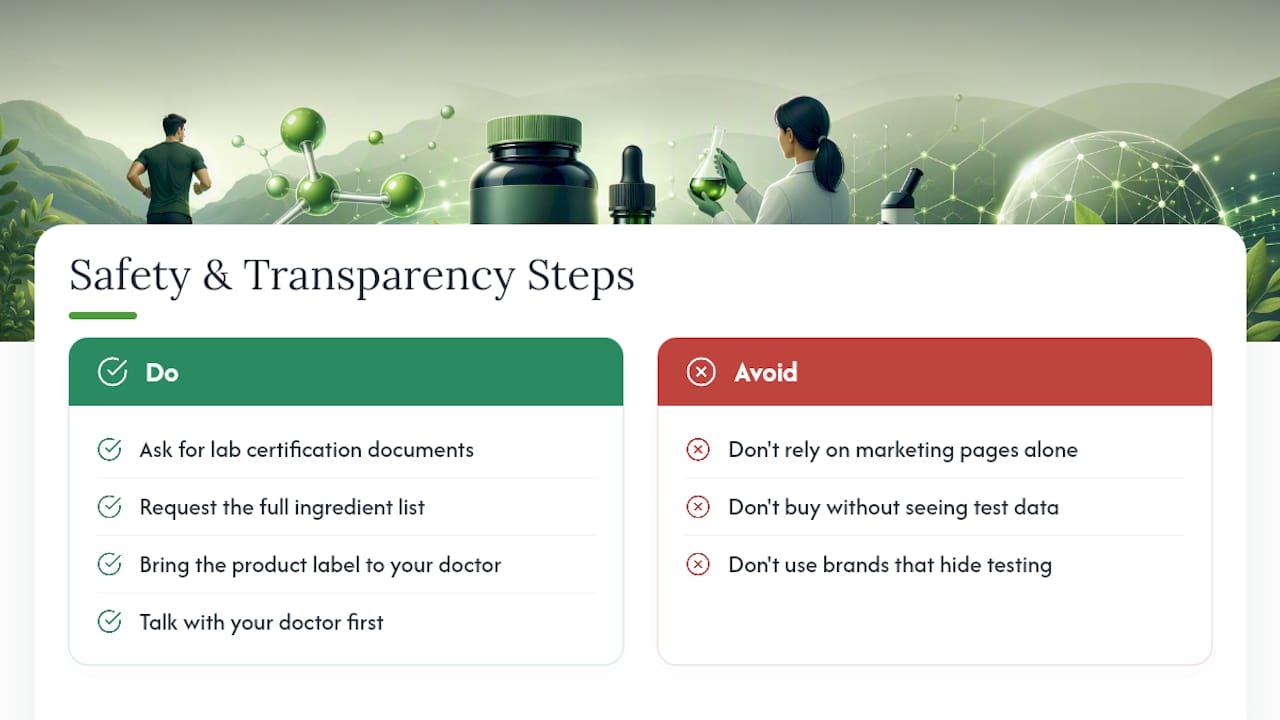
- Choose single-ingredient, clearly labeled products over vague proprietary blends, and favor brands that publish third-party lab testing such as USP or NSF verification.
- Start at the low end of the studied dosage range and track how you feel for at least a week before adjusting.
- Introduce one new supplement at a time. If you add two ingredients together and something goes wrong, you won’t know which one caused it.
- Skip stimulant-stacked pre-workout blends if you’re sensitive to caffeine or already manage blood pressure concerns.
- Monitor your own blood pressure periodically if you’re using these regularly, particularly in the first few weeks.
Pro Tip: Keep the product label or a photo of the ingredient panel on your phone. If you ever end up in urgent care with an unexplained symptom, being able to show a clinician exactly what you took, and at what dose, speeds up diagnosis considerably.
None of this is about scaring you off natural options. Herbal and plant-based approaches to performance and vitality can be perfectly reasonable choices. It’s about using them the way you’d use anything that changes your physiology: with attention, not assumption.
Organic Fuel’s Approach to Safety and Transparency
Organic Fuel specializes in premium organic herbal supplements built for natural enhancement of physical performance and vitality, with core offerings like Alpha Cactus and BioSync-XT formulated as alternatives to synthetic options.
That said, lab testing on our end doesn’t replace a conversation with your own doctor. If you’re weighing any nitric oxide supplement, ask the brand for its lab certification documents and full ingredient list, not just a marketing page, and bring that label to your next appointment. A supplement company that won’t show you its testing data is telling you something important by omission.
Balancing Performance Goals With Safety
We believe in what natural, plant-based formulas can do for stamina, drive, and everyday vitality. That belief comes with a condition: no ingredient list is worth skipping a conversation with your doctor if you’re on medication or managing a heart or blood pressure condition. The supplements that actually help are the ones you take deliberately, at a sensible dose, while paying attention to how your body responds.
Prioritize lab-tested products over flashy marketing claims, track your own reaction honestly, and reach out to Organic Fuel directly if you have questions about a specific formula before you buy.
— Organic
Try Organic Fuel’s Lab-Tested Formulas for Yourself
Organic Fuel builds every formula around organic herbal ingredients instead of synthetic stimulant stacks, which means you know what’s actually in the bottle. Alpha Cactus targets stamina and drive for men managing performance concerns, while BioSync-XT focuses on natural testosterone support for energy and vitality. If you want both approaches together, the Bad Boy Bundle pairs them at a combined value.

That’s not a replacement for medical advice, especially if you’re managing blood pressure or take prescription medication, but it does mean you’re not gambling on an unverified ingredient list. Check out Alpha Cactus today and see which formula fits your goals.
This article is general information, not a substitute for advice from a qualified doctor. Consult a qualified healthcare professional about your own circumstances before acting on anything here.
Sources
- Dietary supplements for improving nitric-oxide synthesis
- L-arginine - Mayo Clinic
- Potential Health Benefits of Nitric Oxide Supplements - Healthline

Comments (0)
There are no comments for this article. Be the first one to leave a message!