

Adaptogens can genuinely help women manage stress and, in some cases, ease hormone-related symptoms, but which one matters more than whether you take any at all. Ashwagandha is the strongest pick for stress and sleep, shatavari leans toward reproductive and hormonal support, and rhodiola targets daytime fatigue. Start with one herb, keep the dose low for two to six weeks, and talk to a clinician first if you’re pregnant, breastfeeding, or on thyroid or hormone medication.
TL;DR:
- Ashwagandha primarily reduces cortisol levels by acting on the HPA axis, with typical doses around 300 mg twice daily, and should be used cautiously with thyroid meds.
- Shatavari supports reproductive hormones with doses of 500 to 1,000 mg daily, but its use should be cautious in hormone-sensitive conditions.
- Stimulating adaptogens like rhodiola and ginseng are best taken before noon to avoid disrupting sleep, especially if used alongside calming herbs.
- Standardized extracts with verified active compounds are essential, as supplement quality varies widely and unstandardized products cannot guarantee efficacy.
- Adaptogens are best used as complementary support rather than replacements for medical treatment, and consulting a healthcare professional is advised before use.
Table of Contents
- Adaptogens for Women: How They Work on Stress vs. Hormones
- The Best Adaptogens for Women, Herb by Herb
- How to Choose and Start an Adaptogen Safely
- What the Research Actually Shows, and Where It Falls Short
- Why We Favor Standardized, Lab-Tested Women’s Formulas
- Ready-Made, Lab-Tested Options for Women’s Wellness
- Sources
Adaptogens for Women: How They Work on Stress vs. Hormones
Adaptogens are plants and fungi that help the body regulate its response to physical and emotional stress rather than pushing it in one direction. They don’t sedate you or hype you up the way a typical drug does. Instead, they nudge two separate control systems back toward balance, and understanding which system a given herb targets is the whole key to picking the right one.
The first system is the HPA axis, short for hypothalamic-pituitary-adrenal axis, which governs your cortisol response to stress. The second is the HPG axis, the hypothalamic-pituitary-gonadal axis, which drives reproductive hormone signaling, including estrogen, progesterone, and the menstrual cycle. Some adaptogens work mostly on one axis, some touch both.
- Ashwagandha acts primarily on the HPA axis, lowering cortisol and easing the physical stress response.
- Shatavari works more on the HPG axis, supporting reproductive hormone signaling and mild phytoestrogenic activity.
- Rhodiola, schisandra, and ginseng act on the HPA axis too, but tend to energize rather than calm.
- Reishi, a mushroom adaptogen, leans toward immune modulation and sleep support rather than hormone signaling.
Women often respond differently to these herbs than men do, partly because reproductive hormone fluctuations interact with cortisol regulation in ways that shift by cycle phase and life stage. That’s part of why a narrative review on ashwagandha’s hormonal effects specifically studied its potential role in conditions like PCOS and PMS, rather than treating it as a generic stress herb.
The Best Adaptogens for Women, Herb by Herb
Each of these has a distinct job. Matching the herb to your actual symptom, rather than grabbing whatever’s trending, is what separates a useful supplement from a wasted bottle.
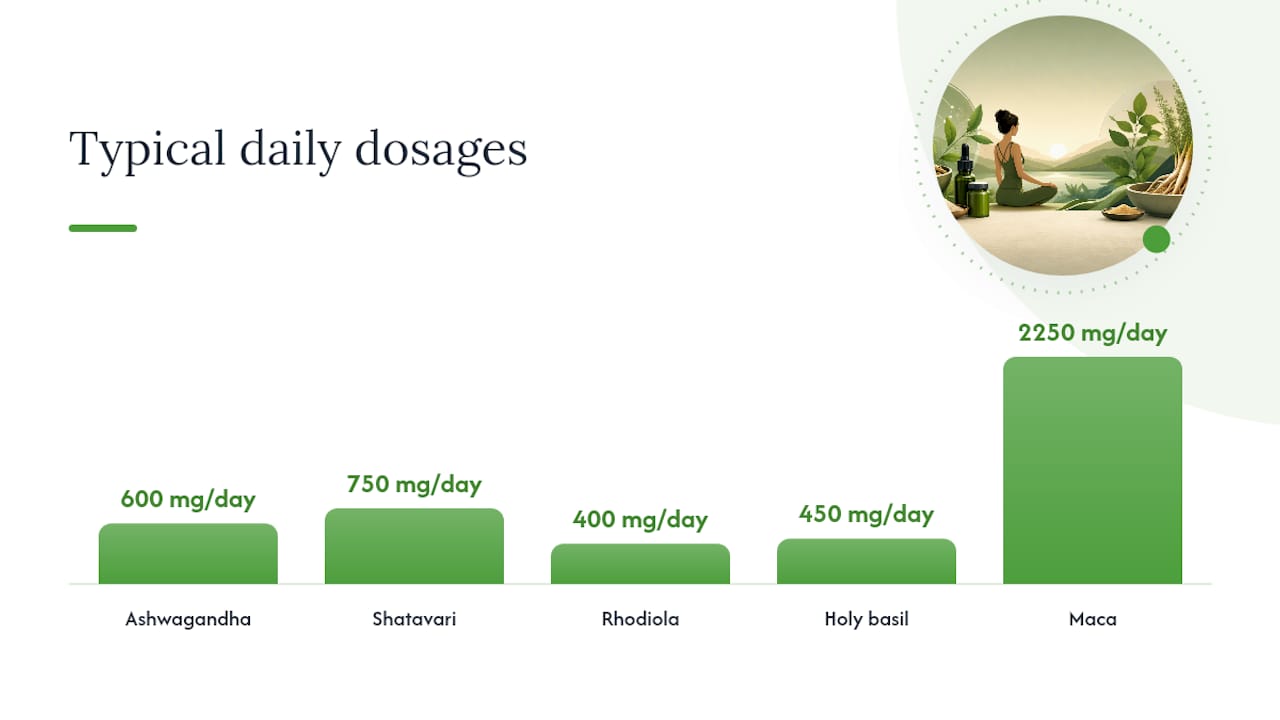
- Ashwagandha. Best for stress, anxiety, and disrupted sleep. Standardized extracts, often labeled KSM-66 or Sensoril, are typically dosed around 300 mg twice daily. Take it in the evening if sleep is your target. Main caution: it can shift thyroid hormone levels, so anyone on thyroid medication needs medical guidance first.
- Shatavari. Best for reproductive and hormone-related symptoms, including PMS and some menopausal complaints, plus documented use for lactation support. Typical starting doses run 500 to 1,000 mg daily, taken with food. Its mild phytoestrogenic activity means it should be used cautiously with hormone-sensitive conditions.
- Rhodiola. Best for daytime fatigue and mental sluggishness. Clinical trials commonly use 200 to 600 mg per day of standardized extract. Take it in the morning only; used late in the day, it can interfere with sleep.
- Holy basil (tulsi). Best for mild anxiety and blood sugar support. Usually 300 to 600 mg daily or brewed as tea, taken any time.
- Maca. Best for libido and energy. Doses range from 1,500 to 3,000 mg daily. It’s stimulating for some women, so morning or early afternoon use works better than nighttime.
- Reishi. Best for immune support and calming sleep disruption tied to overtraining or chronic stress. Typically 1,000 to 1,500 mg in the evening.
- Schisandra. Best for liver support and stress resilience with a mild energizing effect. Common doses sit around 500 to 2,000 mg daily, morning or early afternoon.
- Ginseng (Panax). Best for fatigue and cognitive sharpness. Trials cited in a broader adaptogen review generally use 200 to 400 mg daily, taken in the morning.
Shatavari and ashwagandha are often combined because they act on different axes and complement each other for women dealing with both stress and reproductive symptoms. Stacking multiple stimulating adaptogens, though, like rhodiola with ginseng and maca all at once, tends to just produce jitteriness without added benefit.
Pro Tip: Take stimulating adaptogens like rhodiola strictly before noon. Taken later, even a moderate dose can push back your sleep onset by an hour or more, undoing whatever calming benefit you got from an evening dose of ashwagandha or reishi.
How to Choose and Start an Adaptogen Safely
Before opening a bottle, run through a short mental checklist. It takes two minutes and prevents most of the problems people run into with herbal supplements.
- What’s the primary symptom you’re targeting: sleep, anxiety, energy, libido, or a cycle-related issue?
- Are you on thyroid medication, hormone therapy, or being treated for a hormone-sensitive cancer history?
- Are you pregnant, breastfeeding, or trying to conceive?
- Do you have an autoimmune thyroid condition like Hashimoto’s?
- Is your iron status known, since fatigue symptoms sometimes have a simpler cause?
Once you’ve answered those, the safest approach is a single-herb trial. Pick one adaptogen matched to your main symptom, start at the low end of the dosing range, and hold that dose for two to six weeks before judging results or adding anything else. Track sleep quality, mood, cycle regularity, and libido in a simple notes app so you’re comparing real data against your baseline, not vague impressions.
One RCT of a standardized ashwagandha extract found a significant reduction in serum cortisol among stressed adults taking 300 mg twice daily over eight weeks, according to a trial by Chandrasekhar and colleagues. That’s a meaningful, measurable shift, but it came from a controlled trial with a standardized product, not a random bottle off a shelf.
Stop and check with a clinician if you notice new menstrual irregularities, thyroid symptoms like unexplained weight change or heart palpitations, or if you’re pregnant, breastfeeding, or managing a hormone-sensitive condition. Contraindications here get overlooked constantly: ashwagandha can measurably alter thyroid hormone levels, and phytoestrogenic herbs like shatavari warrant real caution alongside hormone therapies.
What the Research Actually Shows, and Where It Falls Short
The evidence for adaptogens is real but uneven. Ashwagandha has the deepest bench of randomized trials, with consistent cortisol reductions and improved stress scores across multiple studies. Rhodiola and other plant adaptogens covered in a broader clinical review show benefits for fatigue and mood, but trial sizes are often small and endpoints vary enough that pooling results is tricky.
For women’s hormonal symptoms specifically, the picture gets thinner. Evidence for shatavari’s lactation and menopause benefits comes largely from smaller trials and practitioner literature rather than large randomized studies, and research on ashwagandha for PCOS and PMS remains preliminary despite promising early signals around hormone changes.
Extract standardization, meaning the percentage of active compounds like withanolides in ashwagandha or saponins in shatavari, matters enormously for whether a study’s results are reproducible. A bottle without a standardization percentage on the label is essentially an unknown quantity, no matter what the marketing claims.
The practical takeaway: treat adaptogens as adjunctive support, not a replacement for medical care, and understand that outcomes tied to a specific study rarely transfer to an unrelated product on a shelf.
Why We Favor Standardized, Lab-Tested Women’s Formulas
The single biggest failure point in this category isn’t the herbs themselves. It’s inconsistent products. Testing has repeatedly found that supplements don’t match their label claims on active ingredient content, which means two bottles of “ashwagandha” can deliver wildly different doses of the compound that actually matters.
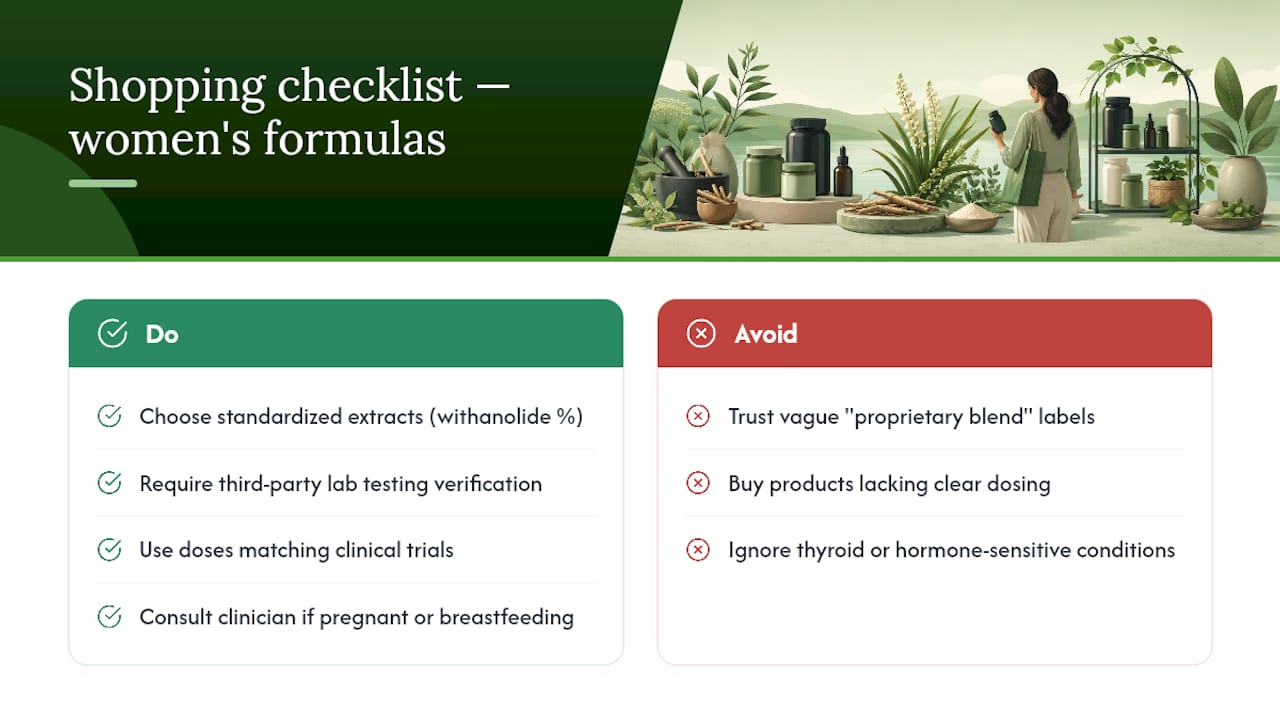
That’s why Organicufuel prioritizes standardized extracts, US lab testing, and clear dosing on every formula we build. When you’re shopping on your own, look for a stated withanolide or saponin percentage, third-party testing verification, and a dose that matches what clinical trials actually used, not a vague “proprietary blend.” And if you’re pregnant, breastfeeding, or managing a thyroid or hormone-sensitive condition, loop in your clinician before starting anything, standardized or not.
— Organic
Ready-Made, Lab-Tested Options for Women’s Wellness
Single-herb trials work well if you enjoy the process of testing and tracking. If you’d rather start with a formula built around clinically informed dosing, Organicufuel is the alternative to guessing your way through a supplement aisle. Our women-focused blends skip the trial-and-error entirely: standardized extracts, US lab testing, and dosing that reflects what actual research used, not marketing convenience.
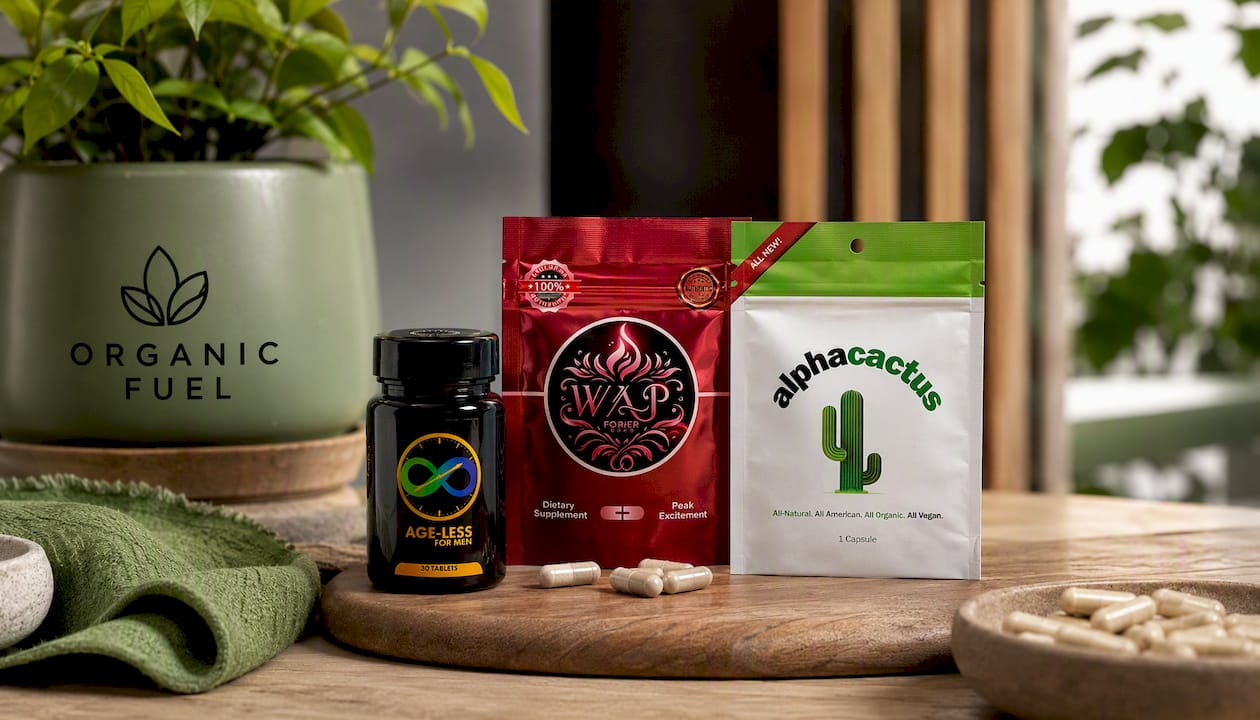
WAP FOR HER ONLY! is built for women looking for support with drive, energy, and overall vitality in one formula. Alpha Cactus targets energy and stamina for women who want a tested option rather than piecing together single herbs. Our catalog also includes Ageless For Men for households shopping for both partners.
| Product | Best for | How to start |
|---|---|---|
| WAP FOR HER ONLY! | Drive, energy, hormonal wellness | Follow label serving; check with a clinician if pregnant, breastfeeding, or on hormone medication |
| Alpha Cactus | Energy and stamina | Start with recommended serving; reassess after 2 to 6 weeks |
If you’re comparing your options against other clean-label products in the category, this review of non-toxic supplement picks is a useful reference point. To get started, pick the formula that matches your primary goal and order directly from Organicufuel.
This article is general information, not a substitute for advice from a qualified doctor. Consult a qualified healthcare professional about your own circumstances before acting on anything here.

Comments (0)
There are no comments for this article. Be the first one to leave a message!