

There’s no single clock time that works for every testosterone booster. The right timing depends on what’s in the bottle: minerals like zinc and magnesium behave differently than herbal extracts like ashwagandha, and both behave differently than a fat soluble vitamin like D3. If the label doesn’t specify a time, pick one consistent slot (or split the dose morning and evening) and stick with it, take it with food unless told otherwise, and loop in your doctor if you have any underlying health condition.
TL;DR:
- Taking zinc or magnesium ZMA capsules about 30 to 60 minutes before bed on an empty stomach enhances absorption and supports overnight hormone regulation.
- Fat soluble nutrients like vitamin D should be taken with a meal containing fat, typically in the morning or midday, for optimal absorption.
- Adaptogens like ashwagandha or fenugreek are best split into two doses daily if supported by trial protocols, usually over eight to twelve weeks.
- Avoid pairing zinc formulas with calcium-rich foods or supplements, as calcium impairs zinc absorption, and consult a healthcare professional if on medication.
- Expect measurable effects from herbal testosterone boosters only after consistent use over eight to twelve weeks, with initial subjective improvements possible earlier.
Table of Contents
- When to Take Testosterone Boosters: Morning, Evening, or Bedtime?
- How to Build a Testosterone Booster Dosing Schedule
- Safety, Drug Interactions, and When to See a Doctor
- How Long Testosterone Boosters Take to Work
- Testosterone Booster Timing Mistakes That Waste Your Dose
- Ingredient-Specific Timing: ZMA, Vitamin D, Zinc, and Adaptogens
- How Organic Fuel Approaches Timing and Formulation
- Where BioSync-XT Fits Into Your Daily Routine
- Sources
- FAQ
When to Take Testosterone Boosters: Morning, Evening, or Bedtime?
Your body’s testosterone production isn’t flat throughout the day. It peaks in the early morning hours and drifts lower as the day goes on, which is exactly why clinicians typically draw blood for testosterone testing between 7 and 11 a.m. That natural rhythm matters more for testing than for supplement timing, but it does explain a lot of the “take it in the morning” advice floating around.
Not every ingredient fits that morning slot, though. ZMA, the combination of zinc, magnesium, and vitamin B6 that shows up in a lot of recovery and sleep formulas, is generally taken in the half hour to hour before bed on an empty stomach. Magnesium supports the kind of deep sleep your body needs to regulate hormone production overnight, and zinc absorbs better away from calcium or dairy, which is one reason nighttime dosing on an empty stomach tends to work better than pairing it with a big dinner.
Adaptogens and herbal extracts play by different rules entirely. Ashwagandha and fenugreek, two of the most studied ingredients in this category, are typically dosed either once daily or split into two smaller doses, following the same pattern used in the clinical trials that tested them. Research reviewing these trials generally uses 8 to 12 week windows to measure changes in strength and body composition. That timeframe only holds up if the dosing pattern matches what was actually tested.
Fat solubility is the detail most people skip. Vitamin D, a fat soluble nutrient, absorbs meaningfully better when taken with a meal that has some fat in it. Water soluble compounds don’t have that requirement, so the “take with food” instruction on a label isn’t boilerplate. It’s usually there for a reason:
- Morning, with breakfast: vitamin D, fat soluble herbal extracts, anything labeled “take with food”
- Split AM/PM: adaptogens like ashwagandha or fenugreek, when the label mirrors a twice-daily trial protocol
- Bedtime, empty stomach: ZMA and standalone magnesium or zinc formulas
How to Build a Testosterone Booster Dosing Schedule
Once you know which category your product falls into, the schedule mostly writes itself. Here’s how to structure it in practice:
- Read the label first. If it lists a specific time or “with meals,” that instruction overrides any general rule in this article.
- Pick a single anchor time if the label is silent. Tie it to something you already do daily, like brushing your teeth or brewing coffee, so you don’t rely on memory alone.
- Split doses when the product calls for it. A morning and evening split keeps blood levels steadier than one large dose, particularly for water soluble ingredients that clear the body faster.
- Separate zinc from calcium and dairy. Take a zinc heavy formula at least two hours away from milk, cheese, or a calcium supplement to avoid blunting absorption.
- Pair fat soluble nutrients with a meal that has fat in it. Eggs, nut butter, or olive oil based dressing all work.
- If you miss a dose, take it when you remember unless it’s close to your next dose. Doubling up isn’t necessary and can increase the odds of stomach upset.
Pro Tip: Set a recurring phone alarm labeled with the supplement name instead of just “take pill.” Vague reminders get dismissed on autopilot; specific ones don’t.
Safety, Drug Interactions, and When to See a Doctor
Certain health conditions change the calculus entirely, and they’re worth ruling out before you start. Men with cardiovascular disease, an enlarged prostate, or a history of polycythemia (an elevated red blood cell count) should talk to a physician before adding any testosterone support product, since these conditions can be affected by shifts in hormone levels.
Timing tweaks aren’t just about maximizing effect. They’re also about avoiding interactions. Zinc taken alongside calcium or high dose dairy gets absorbed less efficiently, and some blood pressure medications and blood thinners can interact with herbal ingredients like fenugreek. If you’re on a prescription medication of any kind, run your supplement label past a pharmacist before combining them.
A few red flags mean it’s time to stop and get checked rather than push through:
- New or worsening chest pain, shortness of breath, or swelling in the legs
- Persistent headaches or vision changes
- Unusual mood swings, aggression, or sleep disruption that didn’t exist before
- Urinary symptoms like difficulty starting a stream or frequent nighttime urination
Baseline lab work helps you know what you’re actually working with. A simple testosterone panel, drawn in the morning when levels naturally peak, gives you a number to compare against later. Men over 40, or anyone with symptoms like persistent fatigue or low libido, benefit from getting that baseline checked before starting any supplement, a point Mayo Clinic reinforces given how gradually testosterone declines with age. If a complete blood count shows elevated red cell counts on a follow-up test, that’s a reason to stop and talk to your doctor, not push through the cycle.
How Long Testosterone Boosters Take to Work
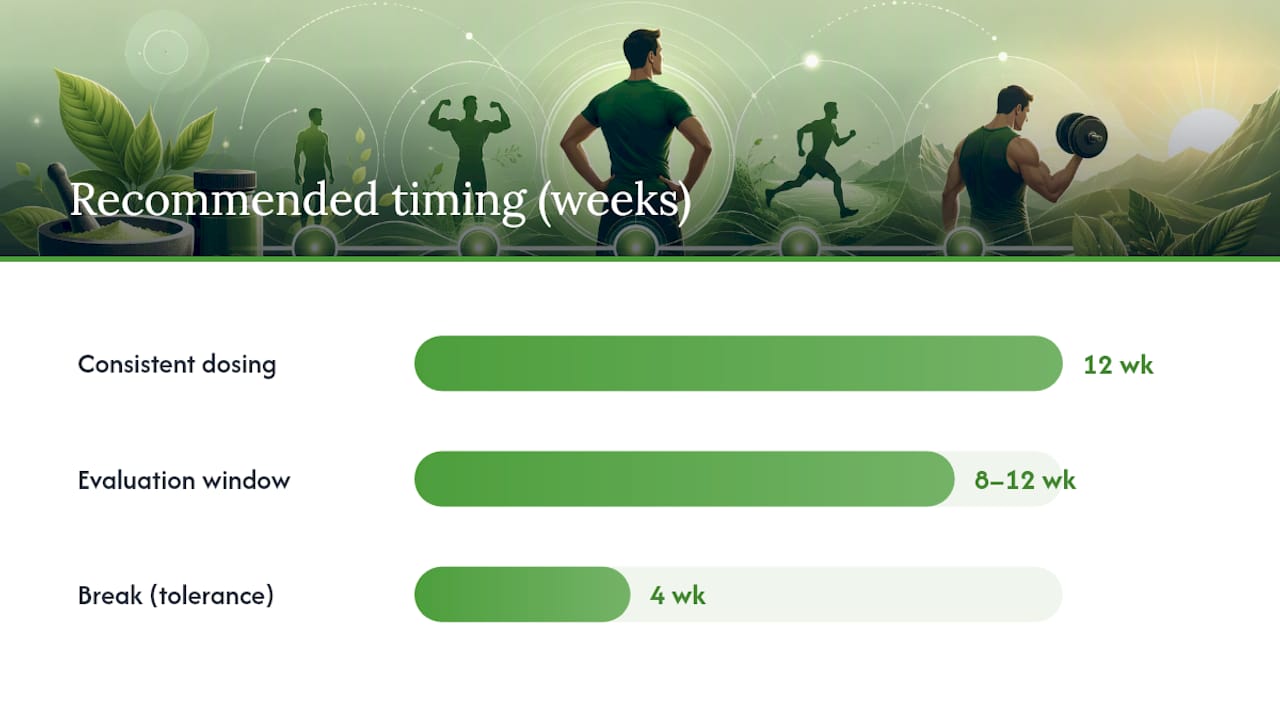
Give it a full 8 to 12 weeks before deciding whether a testosterone booster is working. Reviews of ashwagandha and fenugreek trials consistently use that window to measure real changes in strength and body composition, and there’s a good reason for it: hormonal and metabolic shifts don’t show up in days.
A conservative, evidence-minded cycling approach looks like this:
- Weeks 1 to 12: consistent daily dosing at your chosen time, no changes to the routine
- Week 8 checkpoint: an honest gut check on energy, libido, and gym performance, ideally backed by a follow-up lab panel if you got a baseline
- Weeks 12 to 16: a 4 week break to avoid building tolerance and to see whether effects hold without the supplement
- After the break: resume if you noticed real benefit, or reconsider the product (or talk to your doctor) if you didn’t
Subjective effects show up faster than measurable ones, and that’s where a lot of men get misled. Feeling a bit more alert in week two isn’t the same as a documented change in body composition or lab values, which is why the full cycle matters more than early impressions. If a full cycle passes with zero change in energy, libido, or measurable markers, that’s your signal to stop and get evaluated rather than trying a second round on hope alone.
Testosterone Booster Timing Mistakes That Waste Your Dose
The single biggest misconception is treating testosterone boosters like a pre-workout. They’re not stimulants, and there’s no acute spike that hits thirty minutes after swallowing a capsule the way caffeine does. Timing a dose around a workout to chase an immediate lift is a misunderstanding of how these ingredients actually work.
A few other habits quietly undercut results:
- Taking a zinc formula with a big glass of milk, which blunts absorption
- Skipping food when the label says “take with meals,” especially with fat soluble ingredients
- Switching dose times daily instead of settling into one routine
- Abandoning the product after two weeks because nothing “felt” different yet
Pro Tip: Consistency beats precision. Taking a dose at 8 a.m. every day outperforms taking it at a “perfect” time you only manage twice a week.
Ingredient-Specific Timing: ZMA, Vitamin D, Zinc, and Adaptogens
Each ingredient class carries its own logic, and knowing it saves you from wasted doses. ZMA works best 30 to 60 minutes before bed on an empty stomach, since food, and especially calcium, competes with zinc for absorption while doing little to help the magnesium do its job supporting sleep.
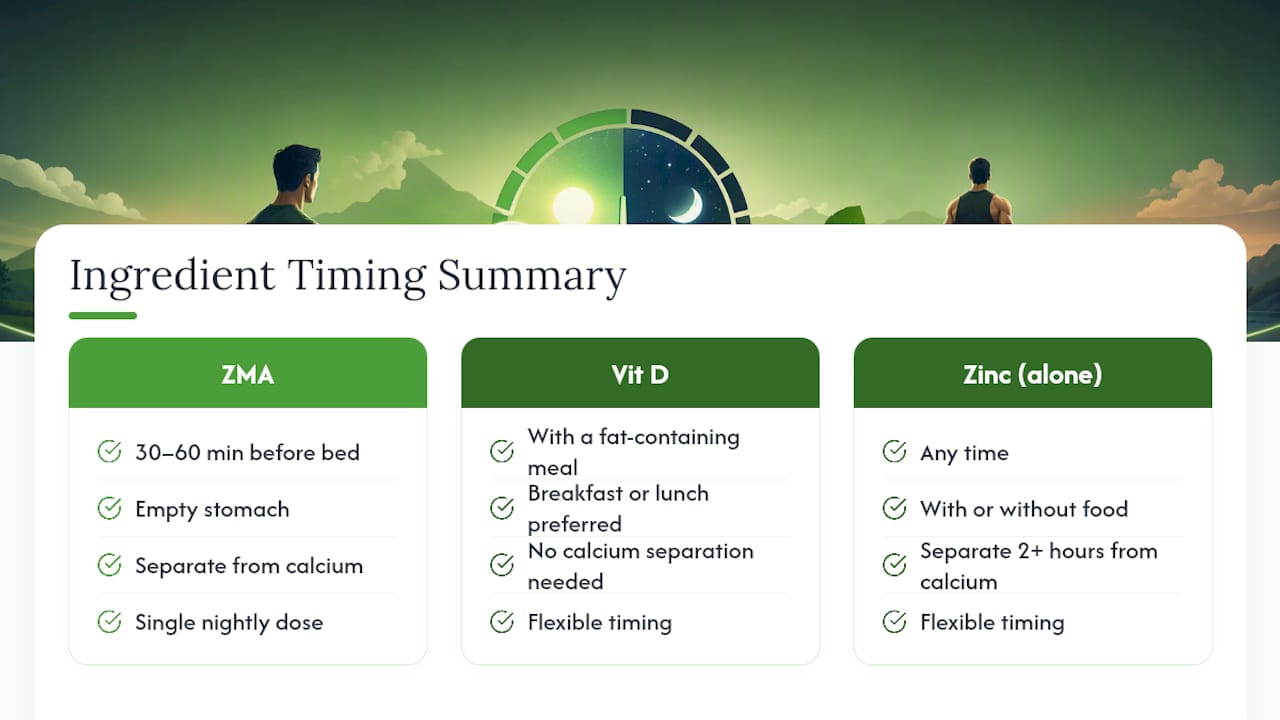
Vitamin D is the opposite case. It’s fat soluble, so it needs a meal with some fat in it to absorb well, which makes breakfast or lunch a better fit than a fasted morning dose. Standalone zinc supplements, separate from a ZMA blend, follow the same separation rule as above: keep them a couple of hours clear of dairy or calcium supplements.
Ashwagandha and fenugreek are more flexible. Both have been studied in once daily and twice daily formats, and the research reviewing these protocols suggests matching whatever pattern the specific trial used for that ingredient gives you the best shot at similar results. If a label mirrors a twice daily study, split the dose; if it mirrors a single dose study, don’t overcomplicate it by splitting anyway.
How Organic Fuel Approaches Timing and Formulation
Some companies formulate and lab-test their products in the United States, including providing label-based timing guidance. When a formula leans on minerals like zinc, the label typically points toward an evening or empty stomach schedule. When it leans on herbal extracts, the guidance shifts toward the dosing pattern that matches how those ingredients were actually studied. The timing distinction between minerals and botanical extracts can affect how well a supplement absorbs and performs.
— Organic
Where BioSync-XT Fits Into Your Daily Routine
If you’re trying to build a testosterone support routine you’ll actually stick with, BioSync-XT Natural Testosterone Support & Booster is built for consistent daily use rather than clock-watching precision. The exact dosing and timing instructions live on the product label, so check the page directly before you start.

If you’re already using zinc or magnesium and want to add an herbal layer, the Bad Boy Bundle pairs complementary formulas so you’re not guessing how two separate products interact. Men who want a broader look at natural performance options, including Alpha Cactus, can browse the full product lineup and compare labels side by side. If you’re on medication or managing a health condition, talk to your doctor before adding any of these to your routine. Start by reading the BioSync-XT label and picking the daily time slot you’re most likely to actually keep.
Sources
- Testosterone capsules — Cleveland Clinic
- Male menopause — Mayo Clinic
- PMC review article (relevant review)
This article is general information, not a substitute for advice from a qualified doctor. Consult a qualified healthcare professional about your own circumstances before acting on anything here.
FAQ
Should I Take Testosterone Boosters at Night or in the Morning?
It depends on the ingredient, not a universal rule. Mineral blends like ZMA work best before bed on an empty stomach, while fat soluble nutrients like vitamin D absorb better taken with a morning or midday meal.
Is There a Downside to Taking Testosterone Boosters?
Yes, particularly for men with cardiovascular disease, prostate concerns, or elevated red blood cell counts, who should get medical clearance first. Certain ingredients can also interact with prescription medications, so check with a pharmacist or doctor if you take any regular medication.
What Should I Avoid Taking With Testosterone Boosters?
Avoid pairing zinc heavy formulas with calcium or dairy, since calcium blocks zinc absorption. If you’re on blood thinners, blood pressure medication, or hormone therapy, talk to your doctor before combining them with herbal ingredients like fenugreek.
Do Testosterone Boosters Actually Work?
Herbal ingredients like ashwagandha and fenugreek show measurable changes in trials that ran 8 to 12 weeks with consistent daily dosing, not overnight. Results depend heavily on matching the label’s dosing pattern and giving it the full window before judging effectiveness.
How Do I Know if I Need a Testosterone Booster?
Persistent fatigue, low libido, reduced muscle strength, and mood changes are common signs worth investigating, especially past age 40. Mayo Clinic recommends a baseline evaluation before starting any hormone-related supplement, since testosterone declines gradually with age and symptoms overlap with other conditions.


Comments (0)
There are no comments for this article. Be the first one to leave a message!