
If you need vegan, Halal, Kosher, or moisture-sensitive formulation, vegetable capsules made from HPMC or pullulan are the better fit. If speed of dissolution, lower cost, or oil-based softgel formats matter most, gelatin still holds real advantages. Neither shell wins outright. The right call depends on your dietary requirements, your fill ingredient, and how much you’re willing to pay for stability and certification.
TL;DR:
- Vegetable capsules, especially those made from HPMC or pullulan, are better suited for vegan, Halal, Kosher, or organic formulations but tend to cost more and may run slower on packaging lines.
- Gelatin capsules dissolve faster, are more cost-effective, and perform well with oil-based softgels, though they are sensitive to humidity and may experience cross-linking delays with reactive fills.
- The shell material alone doesn’t guarantee the entire product is vegetarian or free from animal-derived ingredients, as fillers and processing aids can introduce non-vegetarian components.
- Certification choices like USDA organic or Halal depend on both shell and fill ingredients, requiring thorough ingredient verification beyond capsule labels.
- With storage conditions and fill material interactions in mind, selecting a capsule type should focus on stability and transparency of ingredient sourcing rather than solely on ethics or modernity claims.
Table of Contents
- Vegetable Capsules vs Gelatin at a Glance
- What Are Vegetable Capsules Made Of?
- What Are Gelatin Capsules Made Of?
- How Do Fill Ingredients Affect Capsule Performance?
- Does “Vegetarian” on a Capsule Label Mean the Whole Product Is?
- What Do Vegetable Capsules Cost Compared to Gelatin?
- How Does Organic Fuel Decide Which Capsule Shell to Use?
- Alpha Cactus: Built to Organic Fuel’s Testing Standard
- Which Capsule Should You Actually Choose?
- Sources
- FAQ
Vegetable Capsules vs Gelatin at a Glance
The differences between the two shell types show up in five practical areas: who can eat them, how they hold up in storage, how fast they release their contents, what fills they play well with, and what they cost a brand to run at scale.
- Dietary suitability: Vegetable capsules (HPMC, pullulan) are vegetarian by default and can carry vegan, Halal, Kosher, and USDA organic certifications. Gelatin comes from animal collagen and needs certified sourcing to qualify for Halal or Kosher labeling.
- Moisture and stability: HPMC holds lower moisture and resists humidity swings better than gelatin, which typically runs 12 to 15 percent moisture and can turn brittle or tacky outside a narrow humidity range.
- Dissolution: Both dissolve in the stomach, but gelatin can be delayed by cross-linking reactions with certain fills. While HPMC dissolution stays more predictable over shelf life.
- Formulation fit: Gelatin suits oils and softgels; HPMC suits hygroscopic powders and moisture-sensitive probiotics.
- Cost and runability: Vegetable shells generally cost more and can run slower on packaging lines than gelatin.
One hidden risk worth flagging: a plant-based shell doesn’t automatically mean the whole product is vegetarian. The fill, the coating, and even processing aids can introduce animal-derived ingredients that the capsule material alone won’t tell you about.
What Are Vegetable Capsules Made Of?
Vegetable capsules are built from either hydroxypropyl methylcellulose (HPMC), a plant-cellulose derivative, or pullulan, a polysaccharide fermented from starch. Both are plant-based by origin, though HPMC is chemically modified cellulose rather than an unprocessed material. Formulators treat it as an engineered polymer chosen for specific performance traits, not just an ethical substitute.
That engineering pays off in moisture control. HPMC typically holds less water than gelatin and resists humidity swings that would otherwise soften or crack a shell, a real advantage for hygroscopic fills like certain botanical powders and probiotics. Dissolution runs slightly slower than gelatin in some formulations, though it’s rarely a practical problem for supplement fills.
Certification options are broad: vegan, Halal, Kosher, and, for pullulan specifically, USDA organic. Capsugel’s Vcaps and Organicaps lines are common industry examples of how manufacturers package these materials for supplement brands, offering a high oxygen barrier and immediate release performance comparable to gelatin.
What Are Gelatin Capsules Made Of?
Gelatin comes from collagen extracted from bovine, porcine, or fish sources, processed into the flexible protein that forms both hard capsule shells and softgels. Hard gelatin capsules are the two-piece shells you’d fill with powder or granules; softgels are a single sealed unit, usually holding an oil or liquid fill that a two-piece capsule can’t contain well.
Moisture content sits around 12 to 15 percent, which keeps the shell flexible under normal conditions but leaves it vulnerable at humidity extremes. Too dry and it turns brittle; too humid and it can soften or stick.
Gelatin’s real strength is speed. It dissolves quickly, and it runs efficiently on high-speed encapsulation lines, which keeps manufacturing costs down. Halal and Kosher labeling is possible, but only with certified sourcing. Standard gelatin, without documentation tracing it to an approved source, doesn’t qualify for either.
How Do Fill Ingredients Affect Capsule Performance?
The fill material often decides the shell more than any ethical preference does. Gelatin can undergo cross-linking with aldehydes and certain tannins present in some botanical extracts, forming a tougher, less soluble film across the shell. That delays dissolution and can make release unpredictable over a product’s shelf life. Formulators who work with reactive plant extracts often choose HPMC specifically to sidestep this problem.
- Favors HPMC: hygroscopic powders, probiotics, standardized extracts sensitive to moisture, formulations with reactive plant compounds.
- Favors gelatin: oil-based fills, softgel formats, and any product where fast disintegration and high-speed manufacturing matter more than shell chemistry.
Storage guidance differs too. Gelatin shells hold up best in moderate, stable humidity and temperature; HPMC tolerates a wider humidity range without the same brittleness risk. On the manufacturing side, gelatin still runs faster on many encapsulation lines, which matters for brands watching per-unit cost.
Pro Tip: If you’re evaluating a supplement with a standardized extract, check whether it lists an extract ratio like 10:1. Concentrated extracts are more likely to contain the reactive compounds that cause cross-linking, which makes shell choice more than a cosmetic decision.
Does “Vegetarian” on a Capsule Label Mean the Whole Product Is?
Not necessarily. A plant-based shell tells you about the capsule, not the formulation inside it. Regulatory reviewers have noted that a product’s vegetarian status depends on its full ingredient and processing chain, not the shell material alone. Flow agents, coatings, and even manufacturing aids can introduce animal-derived components that never show up in a headline claim.
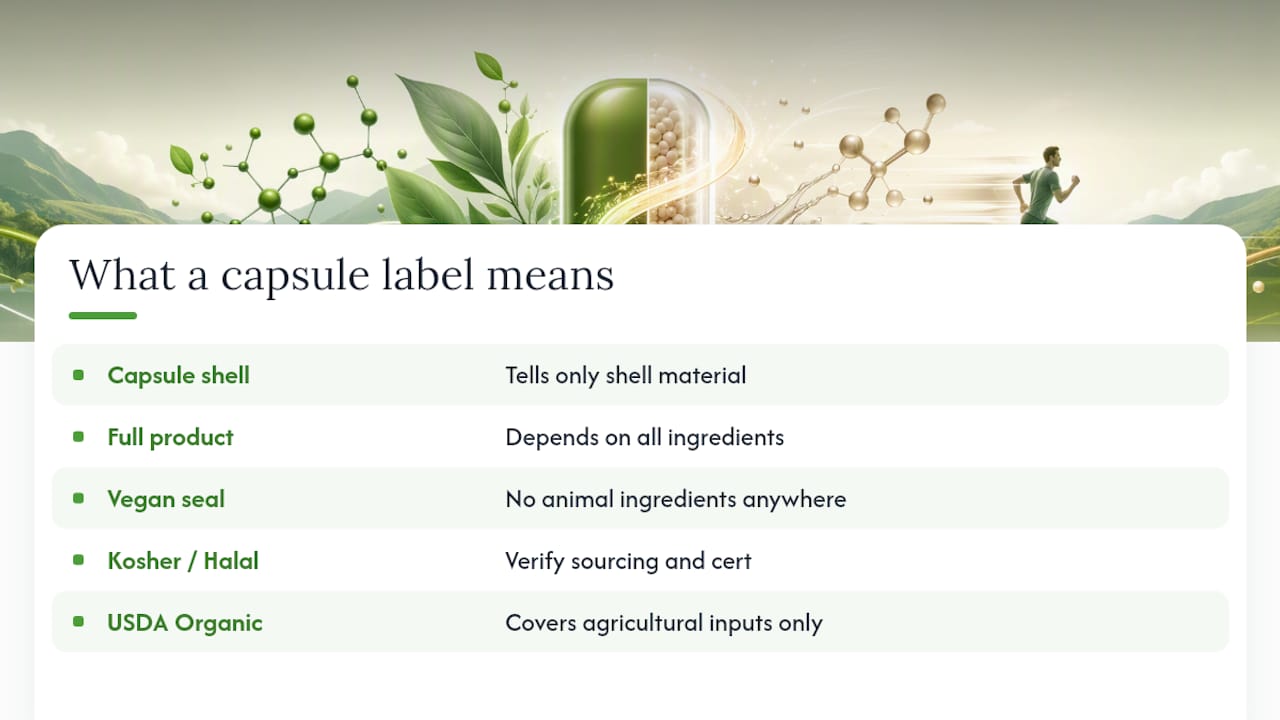
Certifications help narrow the gap, but each covers something specific. A Vegan seal usually means no animal-derived ingredients anywhere in the product. Kosher and Halal certifications verify sourcing and processing against religious dietary law, which is why gelatin can carry either label only when it’s certified accordingly. USDA organic applies to agricultural inputs and processing standards, not dietary status.
Before you trust a label, check the full ingredient panel, look for a specific certification mark rather than a marketing claim like “veggie capsule,” and confirm the certifying body if one is named.
What Do Vegetable Capsules Cost Compared to Gelatin?
Vegetable shells usually cost more per unit. Raw material supply is tighter, pullulan production relies on a fermentation process that isn’t as widely scaled as gelatin extraction, and specialized manufacturing adds expense that gets passed down the supply chain.
For small brands, that shows up in two places: higher per-unit shell cost and, in some cases, slower run speeds on packaging lines, which can affect minimum order quantities and lead times. It’s a real trade-off, not a dealbreaker. If a brand wants to make a sustainability claim, verify it goes beyond the shell material. Ask whether the certification covers full traceability or just the capsule itself, and check whether the “organic” or “sustainable” language comes from a real certifying body or just packaging copy.
How Does Organic Fuel Decide Which Capsule Shell to Use?
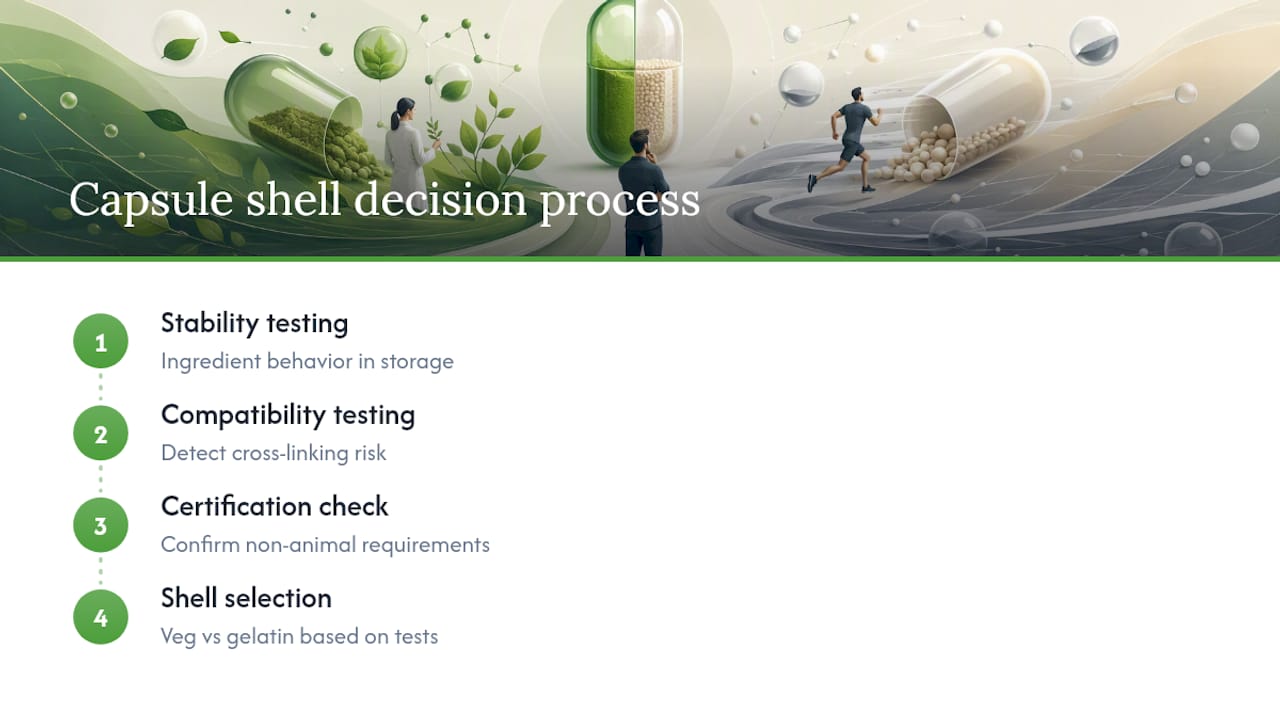
Choosing a shell isn’t an afterthought once a formula is finalized. It’s a decision that has to account for how a fill behaves in storage, whether it’s prone to reacting with gelatin, and whether certification requirements rule out an animal-derived shell entirely.
Organic Fuel evaluates capsule type against three criteria: ingredient stability under real storage conditions, compatibility testing to catch cross-linking risk before it reaches shelf life, and the certification profile the finished product needs to carry. Every formulation is tested in US labs before it ships, backed by a 100% money-back guarantee that reflects confidence in how a product performs, not just what shell it’s packaged in. If you need vendor-level detail on a specific product’s capsule type, the product specification pages carry that information directly.
Alpha Cactus: Built to Organic Fuel’s Testing Standard
If you’re weighing shell type as part of a bigger decision about which supplement to trust, Alpha Cactus exemplifies how some brands apply capsule selection standards in an actual product.
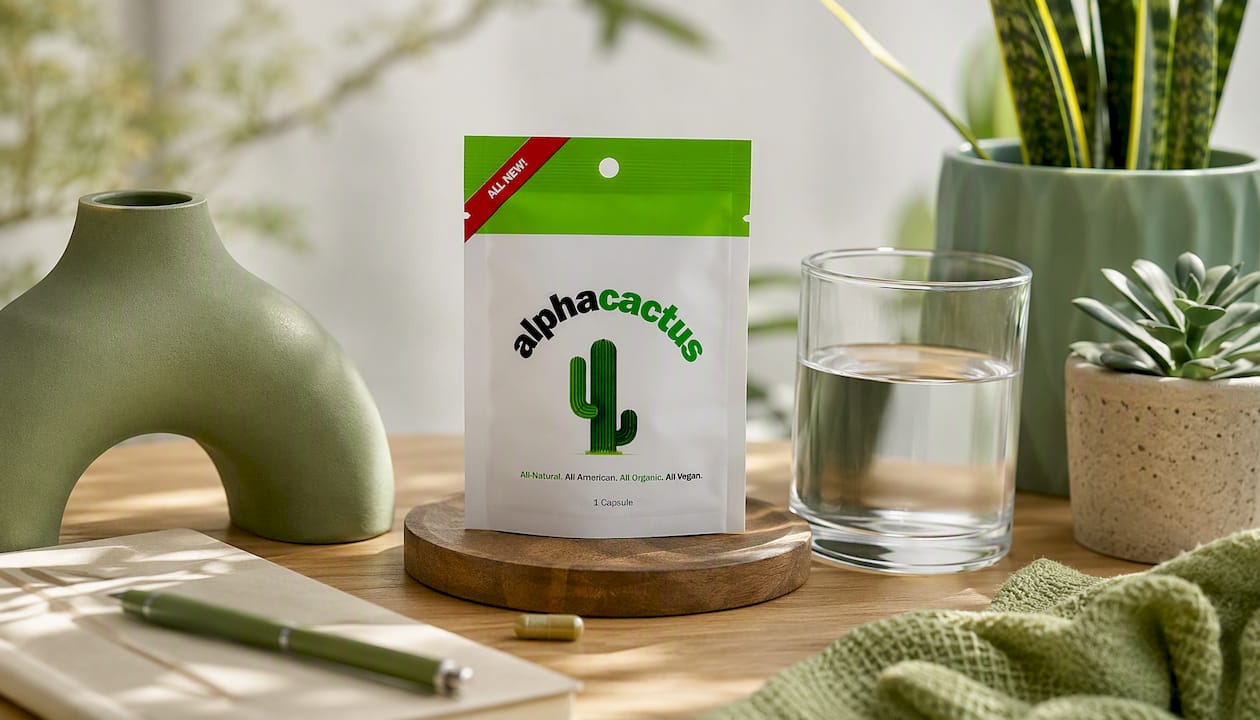
Specific capsule-type details for Alpha Cactus are documented on its product page, so if shell composition is a deciding factor for you, that’s the place to check before you buy. Capsule selection can be treated as one part of a broader safety and efficacy standard, not just a marketing consideration. You can review the Alpha Cactus product page directly or visit Organic Fuel to see the full lineup and testing claims behind it.
Which Capsule Should You Actually Choose?
The honest answer is that most people overthink the ethics question and underthink the chemistry question. If your dietary or religious requirements are non-negotiable, that decision is already made for you. But if you’re formulation-agnostic, the fill ingredient and storage conditions matter more than which shell sounds more modern. Check the product page or ask the brand directly if capsule type affects your decision. Alpha Cactus is a reasonable place to start that conversation.
— Organic
Sources
- Are your capsules vegetarian or nonvegetarian: An ethical and scientific justification — PMC
- Study on capsule dissolution and cross-linking effects — PubMed
- Organicaps™ Pullulan Organic | Capsugel
FAQ
What Are the Downsides of Gelatin Capsules?
Gelatin capsules are animal-derived, which excludes vegans and vegetarians unless certified sourcing supports Halal or Kosher claims. They’re also more sensitive to humidity and can experience cross-linking with certain fill ingredients that delays dissolution over time.
Are Vegetable Capsules Good for You?
Vegetable capsules made from HPMC or pullulan are considered safe and are widely used across the supplement industry. They offer lower moisture content and better resistance to humidity swings than gelatin, which can extend shelf stability for moisture-sensitive fills.
Are Vegetable Cellulose Capsules Safe to Use?
Yes. HPMC is a well-established, widely used capsule material with a long track record in both pharmaceutical and supplement manufacturing. It’s chemically modified cellulose, not a raw plant extract, but it’s recognized as safe for oral use.
Do Vegetable Capsules Dissolve in the Stomach?
Yes, vegetable capsules dissolve in the stomach just as gelatin capsules do. Dissolution can run slightly slower in some formulations than gelatin, but it remains reliable and predictable, which is one reason HPMC is often chosen over gelatin for moisture-sensitive or reactive fills.

Comments (0)
There are no comments for this article. Be the first one to leave a message!