

Timing changes outcomes for a small, specific list: fat-soluble vitamins, iron, post-workout protein, stimulants, and sleep aids. Everything else on your shelf responds more to daily consistency than clock precision. Give most supplements 4 to 12 weeks before judging them, expect same-day feedback from stimulants, and check with a doctor before combining anything with prescription medication, especially blood thinners or thyroid drugs.
TL;DR:
- Supplement timing is crucial mainly for fat-soluble vitamins, iron, post-workout protein, stimulants, and sleep aids, while most others respond better to daily consistency.
- Fat-soluble vitamins and omega-3s should be taken with meals containing fat, and iron absorption peaks on an empty stomach but can cause stomach upset; pair it with vitamin C and avoid coffee for better absorption.
- Most vitamins require four to twelve weeks of consistent use to show measurable effects, with structural changes needing three to six months; immediate effects can occur from stimulants or iron within days.
- Spacing minerals like iron, calcium, zinc, and magnesium by two to four hours improves absorption, but taking them together daily is preferable to inconsistent spacing.
- Anchoring supplement doses to daily meals and giving each a proper trial period significantly improves effectiveness and simplifies routine management.
Table of Contents
- When Does Supplement Timing Actually Matter?
- How Long Do Supplements Take to Show Results?
- Sample Supplement Schedules You Can Actually Follow
- Which Supplement Combinations Should You Avoid Taking Together?
- How Do You Track Whether a Supplement Is Working?
- How Organicufuel Approaches Timing and Quality
- What Actually Works: One Practical Heuristic
- Find the Right Product for Your Goals
- Sources
- FAQ
When Does Supplement Timing Actually Matter?
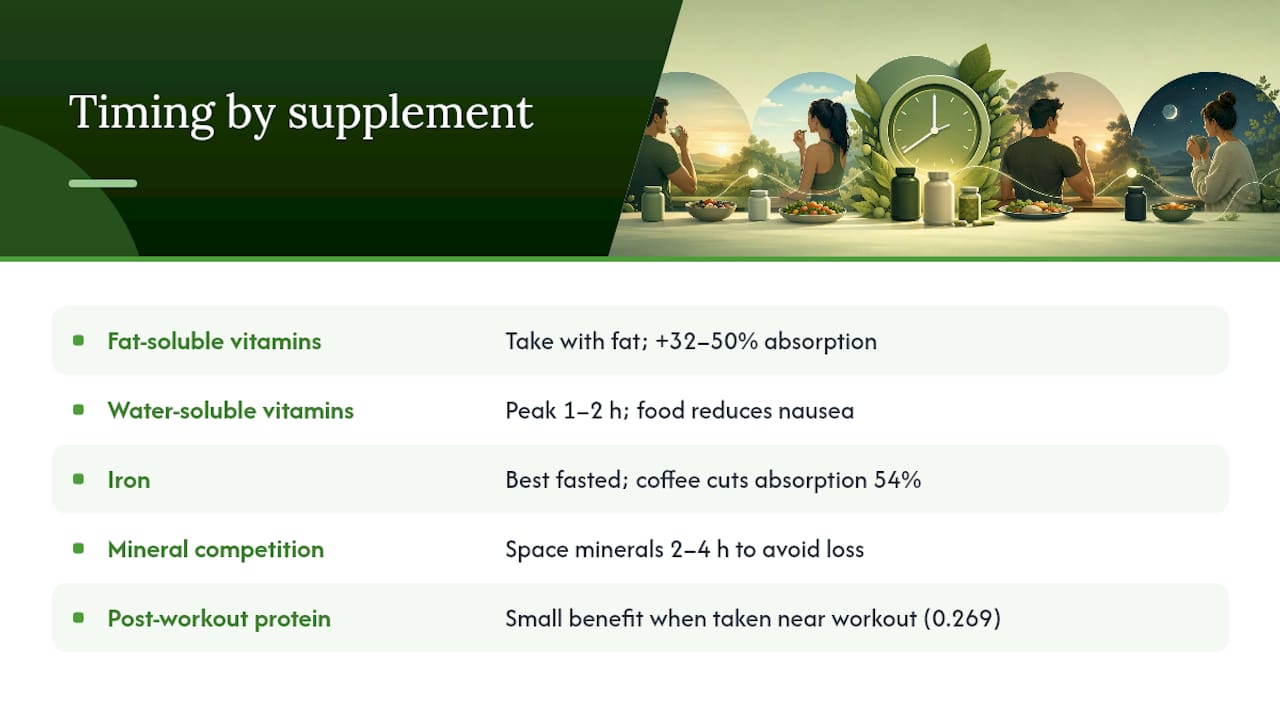
Meal composition moves the needle far more than the hour on your watch. Vitamin D3 absorption jumps by roughly 32 to 50 percent when taken with a meal containing dietary fat compared with a fat-free meal or an empty stomach. That single data point explains why “take with food” isn’t a throwaway label instruction. It’s the difference between a supplement that works and one that mostly passes through you.
Fat-soluble vitamins (A, D, E, K) need dietary fat to absorb into the bloodstream. A tablespoon of peanut butter, a few almonds, or eggs at breakfast is enough. Skip the fat and you’re leaving a meaningful chunk of that dose on the table.
Water-soluble vitamins (B-complex, vitamin C) dissolve in the body’s water content and peak in the blood within one to two hours of ingestion, regardless of food. Taking them with food does one useful thing: it curbs the nausea some people get from B vitamins on an empty stomach. If you want a subjective energy lift from B-complex, take it in the morning. Taken at night, some people report it interferes with sleep.
Iron is where fasted versus fed state really splits results. Iron absorbs best on an empty stomach, but that’s also when it’s hardest on the stomach lining. Coffee is the bigger enemy here: one study found coffee taken alongside a 100 mg iron dose cut absorption by 54 percent compared with water. Pair iron with a small amount of vitamin C instead, which can boost non-heme iron absorption by a moderate amount, and keep coffee or tea at least an hour away from the dose.
Mineral competition is a real absorption problem, not a theoretical one. Calcium, iron, zinc, and magnesium all use overlapping transport pathways in the gut. Taking them together in high doses means they compete, and everyone loses a little efficiency. A 2 to 4 hour spacing window is the practical fix. That said, if spacing four doses across your day means you’ll forget half of them, taking your minerals together at breakfast every single day beats a “perfect” schedule you abandon after two weeks.
Omega-3s follow the same fat-dependent logic as vitamin D. Bioavailability rises noticeably when fish oil is taken with a meal that has some fat in it rather than a lean, low-fat one. Meal composition matters more here than whether you take it at 7 a.m. or 7 p.m.
Post-workout protein and carbohydrate have real, if modest, timing evidence behind them. A systematic review and meta-analysis of post-exercise supplement timing found a small but statistically significant benefit for recovery metrics when protein and carbs were taken close to the workout, with a combined effect value of 0.269 across the pooled studies. The effect size is real but modest, and it varies by exercise type and intensity. Total daily protein intake still matters more than hitting some narrow “window” to the minute.
Probiotics are formulation-specific enough that a blanket rule doesn’t work. Some strains need the buffering effect of food to survive stomach acid; others are enteric-coated and designed to survive fasted. Check the label. When in doubt, taking a probiotic with the first bite of a meal is a safe default.
Pro Tip: If you’re only going to optimize one thing, optimize the meal, not the clock. Taking your vitamin D with dinner beats taking it at a precise “ideal hour” on an empty stomach every time.
How Long Do Supplements Take to Show Results?
Most vitamins need 4 to 12 weeks of consistent use before you can fairly judge whether they’re doing anything. That’s the window used by most clinical and nutrition guidance for outcomes like energy, mood, and general biomarker shifts, and it’s the number worth writing on your calendar the day you start a new supplement.
Same day to a few days: Stimulants (caffeine, some pre-workout blends) and acute symptomatic relief for a diagnosed deficiency. If you’re severely iron deficient, you may feel a difference within one to two weeks as hemoglobin starts to recover.
4 to 12 weeks: Most vitamins, mood and energy support, immune-support supplements, and many hormonal or metabolic shifts. This is the range where the bulk of “does this even work” questions get answered.
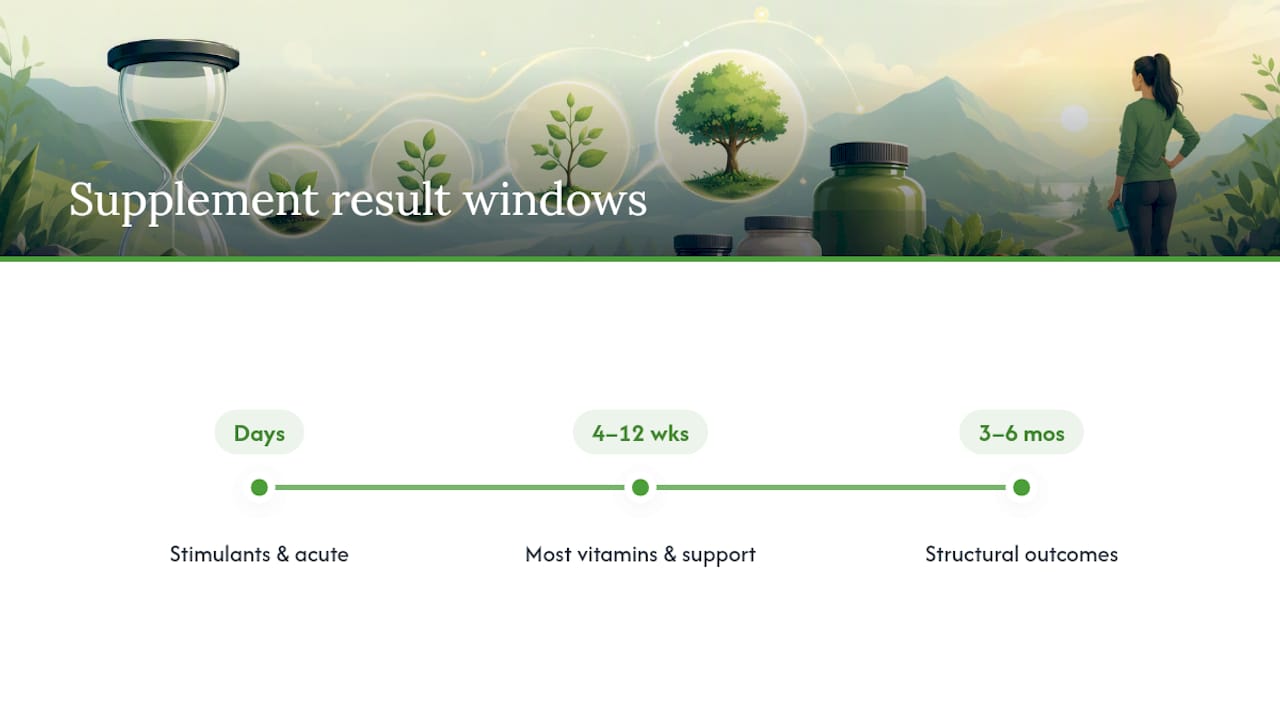
3 to 6 months: Structural outcomes. Collagen for skin or joints, broader hormonal support, and anything tied to tissue remodeling rather than blood chemistry needs this longer runway.
Your starting point changes everything. Someone with a diagnosed deficiency will feel a supplement working faster than someone taking the same product for general maintenance, simply because there’s more room to improve. Dose, formulation quality, how consistently you actually take it, and your baseline diet and exercise habits all shift these windows in either direction.
If you’ve hit the 8 to 12 week mark with zero change, that’s your signal to either reconsider the dose, check with a clinician about lab testing, or conclude that particular supplement isn’t the right fit for your body. Stopping earlier than that usually just means you never gave it a fair trial.
Sample Supplement Schedules You Can Actually Follow
Anchoring every dose to a meal you already eat every day beats a color-coded pill organizer with six separate alarm times. Here are four schedules built around that idea.
1. Basic daily wellness routine
- Multivitamin and fish oil with your largest meal of the day (whichever one reliably has some fat in it).
- B-complex with breakfast if you want a subjective energy effect; skip the evening dose if it disrupts sleep.
- Vitamin C anytime, ideally alongside iron if you take both.
2. Iron-focused routine
- Take iron first thing in the morning, 30 to 60 minutes before breakfast, with a small glass of orange juice or a vitamin C tablet.
- Wait at least one hour before your morning coffee or tea.
- If iron upsets your stomach on an empty stomach, move it to a small snack instead and accept a modest absorption trade-off for tolerability. A supplement you can actually keep downbeats one you keep skipping.
3. Training-day routine
- Caffeine or pre-workout supplements 30 to 45 minutes before training for peak stimulant effect.
- Protein and carbohydrate within 30 to 60 minutes after intense training, particularly for back-to-back training days where recovery speed matters most.
- Spread remaining protein intake evenly across your other meals. The old “anabolic window” idea has been largely overstated in more recent research; total daily protein intake carries more weight than hitting a precise post-workout minute.
4. Evening wind-down routine
- Magnesium glycinate or glycine 30 to 90 minutes before bed.
- Cut off any stimulant, including pre-workout products and B-complex if it energizes you, at least 6 to 8 hours before bedtime.
- Melatonin, if used, goes right before lights out, not earlier.
Do and don’t checklist:
- Do pair fat-soluble vitamins and fish oil with a meal that has fat in it.
- Do separate iron from coffee, tea, calcium, and zinc by at least an hour.
- Don’t chase a perfect six-times-a-day schedule if it means you’ll quit within a month.
- Don’t take stimulants late enough to compromise sleep, even if the workout runs late.
Which Supplement Combinations Should You Avoid Taking Together?
A handful of interactions are common enough, and consequential enough, that they’re worth memorizing rather than looking up every time.
- Levothyroxine and other thyroid medications: Take on an empty stomach, 30 to 60 minutes before food, and separate from calcium, iron, or magnesium supplements by roughly four hours. These minerals bind thyroid medication and blunt its effect.
- Magnesium and certain antibiotics: Space these by 2 to 4 hours. Magnesium can bind to some antibiotic classes in the gut and reduce how much antibiotic actually gets absorbed.
- Iron, calcium, and zinc together: Avoid stacking high doses of these three in one sitting. They compete for the same absorption pathways, so splitting them across different meals, or at least a few hours apart, protects the effectiveness of each.
- Anticoagulants like warfarin: Vitamin K–containing supplements, fish oil, and several herbal products can interact meaningfully with blood thinners. This is a conversation for your doctor, not a forum thread.
Pro Tip: Pregnancy, prescription medication, and anticoagulant use are the three situations where “just try it and see” isn’t good enough. Call your pharmacist before adding a new supplement in any of these cases; they can check for interactions in about five minutes.
How Do You Track Whether a Supplement Is Working?
A simple log beats guessing. Note the start date, dose, and the specific meal you anchor it to, then track energy, sleep quality, mood, and any side effects on a weekly basis. Vague memory of “feeling better lately” isn’t data you can act on.
Objective lab testing gives you a second layer of confirmation for supplements where symptoms alone are unreliable. A 25-hydroxyvitamin D blood test, ferritin and hemoglobin panels for iron, and B12 levels are the most useful retest targets, and most clinicians suggest rechecking these every 8 to 12 weeks after starting or adjusting a dose.
| Supplement type | Fair trial window | Decision point |
|---|---|---|
| Stimulants (caffeine, pre-workout) | Same day to a few days | Adjust dose or timing if jittery or sleep-disrupted |
| Iron | 4 to 8 weeks | Recheck ferritin/hemoglobin; adjust dose with clinician |
| General vitamins (D, B-complex, C) | 8 to 12 weeks | Continue if symptoms improve; consider lab test if not |
| Structural (collagen, joint support) | 3 to 6 months | Reassess with a longer trial before stopping |
If you notice unusual symptoms such as chest pain, severe gastrointestinal upset, or signs of an allergic reaction, stop the supplement and seek medical care immediately rather than waiting out the trial window.
How Organicufuel Approaches Timing and Quality
Organicufuel formulates its herbal supplements with ingredients lab-tested in the United States for both safety and potency, and every product carries a 100% money-back guarantee. That combination matters more in a supplement category where synthetic alternatives and unverified sourcing are common.
- Some products are manufactured under registered and certified conditions.
- Timing guidance follows label instructions specific to each formulation.
- Fat-soluble active ingredients perform best paired with a meal containing some dietary fat.
- Customers combining any herbal supplement with prescription medication should consult a healthcare professional first.
Specific clinical trial data on individual formulations may be available directly through the brand; check product pages for the latest information.
What Actually Works: One Practical Heuristic
Anchor your supplements to meals you already eat, reserve precise timing effort for the handful of cases where evidence actually supports it, and give everything else a real 8 to 12 week trial before deciding. Athletes chasing measurable performance gains should prioritize post-workout protein timing; everyday wellness users get more value from consistency than from any clock.
— Organic
Find the Right Product for Your Goals
If you’re looking for targeted support rather than a general multivitamin routine, Some performance-focused formulas are built around the same meal-anchored logic covered above. The BioSync-XT Natural Testosterone Support & Booster is formulated to support natural testosterone and vitality, and works best taken consistently with a meal containing some fat, following the label’s dosing frequency.

For readers managing multiple goals at once, energy, drive, and performance, the Bad Boy Bundle combines several formulas into one routine. Alpha Cactus targets stamina and sexual wellness, and like the rest of the lineup, it is built from organic herbal ingredients tested in labs. None of these products replace a conversation with your doctor if you’re on prescription medication, but some are positioned as natural alternatives to synthetic enhancement products. Check the label on each product for exact dosing frequency, then visit the BioSync-XT product page to see current options and the money-back guarantee terms.
Sources
- Effect of vitamin D3 supplementation with and without a fat-containing meal on serum 25-hydroxyvitamin D: randomized clinical trial
- An investigation into how the timing of nutritional supplements affects the recovery from post-exercise fatigue: a systematic review and meta-analysis
- Does timing matter when you take supplements? Here’s what the evidence says
This article is general information, not a substitute for advice from a qualified doctor. Consult a qualified healthcare professional about your own circumstances before acting on anything here.
FAQ
How long do you need to take supplements to see results?
Most vitamins and general wellness supplements need 4 to 12 weeks of consistent use before you can fairly judge their effect; structural supplements like collagen may need 3 to 6 months.
Does the timing of supplements matter?
Timing matters most for fat-soluble vitamins, iron, post-workout protein, stimulants, and sleep aids; for most other supplements, taking them consistently every day matters more than the exact hour.
When is the best time to take vitamin D3, K2, and magnesium?
Take vitamin D3 and K2 with a meal containing some dietary fat to maximize absorption, since fat-free intake can cut absorption significantly; magnesium works well in the evening, 30 to 90 minutes before bed, to support sleep.
How long should I wait between each vitamin?
For competing minerals like iron, calcium, and zinc, aim for a 2 to 4 hour gap between doses; if that’s not realistic for your schedule, taking them together consistently every day still beats skipping doses to chase perfect spacing.

Comments (0)
There are no comments for this article. Be the first one to leave a message!