

The fastest, best-supported way to improve erection blood flow is a combination approach: aerobic exercise sessions of moderate duration several times per week, daily pelvic-floor training, a heart-healthy diet rich in nitrates and flavonoids, and management of any underlying cardiovascular risk. Supplements like L-citrulline and trans-resveratrol have real trial support but should be checked against your medications first. If erections are unreliable for more than a few weeks, or you take nitrates for heart disease, see a clinician before combining any of these approaches, since some medical treatments carry serious interaction risks.
TL;DR:
- Regular aerobic exercise, especially for men with significant circulation issues, produces the most measurable improvement in erectile function.
- Losing waist fat through moderate weight loss significantly enhances blood vessel health, boosting erectile quality even without achieving a normal BMI.
- Strengthening pelvic floor muscles with daily exercises can rival medication effectiveness for maintaining erections, especially when muscle weakness is the primary issue.
- Supplements like L-citrulline and trans-resveratrol improve blood flow when taken at appropriate doses and with medical clearance, particularly for men unresponsive to drugs.
- Combining lifestyle changes with medical treatments such as PDE5 inhibitors provides the most reliable and sustained improvements in erectile blood flow.
Table of Contents
- Lifestyle Changes That Reliably Improve Penile Blood Flow
- How Pelvic Floor Training Supports Stronger Erections
- Do Supplements Really Improve Blood Flow to the Penis?
- What Medical Treatments Increase Blood Flow to the Penis?
- When Should You See a Doctor About Erection Problems?
- Publisher Note: How Organicufuel Fits an Evidence-Based Plan
- What This Guide Gets Right That Most Advice Misses
- Where the Bad Boy Bundle Fits Into Your Plan
- Sources
- FAQ
Lifestyle Changes That Reliably Improve Penile Blood Flow
Erections are a plumbing problem before anything else. Blood has to flow in faster than it flows out, and the vessels doing that work are some of the smallest and most sensitive in your body. That’s actually good news: because penile arteries are so narrow, they tend to show circulation problems years before the bigger arteries around your heart do. Fix the plumbing here, and you’re very likely improving it everywhere else too.
Exercise is the single most studied lever. A Harvard Health review of nondrug approaches found that regular aerobic activity performed multiple times per week, produces measurable improvement in erectile function, with the biggest gains showing up in men who started with the worst symptoms. That’s an important detail: if your blood flow is already badly compromised, exercise has more room to help, not less. You don’t need a gym membership. Brisk walking, cycling, swimming, or interval training on a bike all count, as long as your heart rate climbs and stays elevated for a sustained stretch.
Weight loss matters more than most men expect. Losing a moderate percentage of body weight, even without hitting a “normal” BMI, is associated with real improvements in sexual function, largely because visceral fat around the waist drives inflammation and hormone disruption that stiffens blood vessels. Track waist circumference, not just the scale. A shrinking waistline while your weight stays roughly flat still counts as progress.
Smoking is the fastest way to sabotage everything else on this list. Nicotine constricts blood vessels directly, and long-term smoking damages the vascular lining (the endothelium) that produces nitric oxide, the molecule responsible for the vessel relaxation an erection depends on. Quitting, even after decades of smoking, starts reversing some of that damage within weeks. Alcohol works on a dimmer switch: heavy or frequent drinking blunts arousal signals and, over time, worsens vascular health, but moderate intake (a drink or two on occasion) doesn’t appear to carry the same penalty.
Sleep and hydration are the quiet variables nobody asks about. Poor sleep disrupts testosterone production and raises blood pressure, both of which work against blood flow. Dehydration thickens blood slightly, making it harder to move efficiently through small vessels. Neither fix is glamorous, but both are free.
Diet ties it together. A Mediterranean-style pattern, built around olive oil, fish, whole grains, and vegetables, is consistently linked to better vascular flexibility. Flavonoid-rich fruits, berries, cherries, and citrus in particular, are associated with a lower incidence of erectile dysfunction when eaten regularly. Nitrate-rich vegetables like beetroot and spinach convert in the body to nitric oxide, the same molecule your blood vessels use to relax and widen.
A practical weekly checklist:
- Three or more servings of berries, cherries, or citrus per week
- Beetroot or dark leafy greens several times a week (juice, roasted, or raw)
- Fatty fish (salmon, sardines, mackerel) twice a week for omega-3s
- Olive oil in place of butter or vegetable oil where you can
- One processed or fried food swapped for a whole-food version each week
Pro Tip: Pair your cardio with your diet changes rather than staggering them. Nitrates from beetroot and leafy greens work by supporting nitric oxide production, and exercise stimulates the same pathway through improved endothelial function. Doing both in the same week compounds the effect instead of testing each variable in isolation.
How Pelvic Floor Training Supports Stronger Erections
Erections run on two mechanisms working together: blood flowing in through the arteries, and blood being trapped there by muscles that compress the veins trying to drain it out. Most lifestyle advice focuses on the first mechanism. The pelvic floor, specifically the bulbocavernosus and ischiocavernosus muscles, controls the second, and it’s badly underused in most conversations about erectile health.
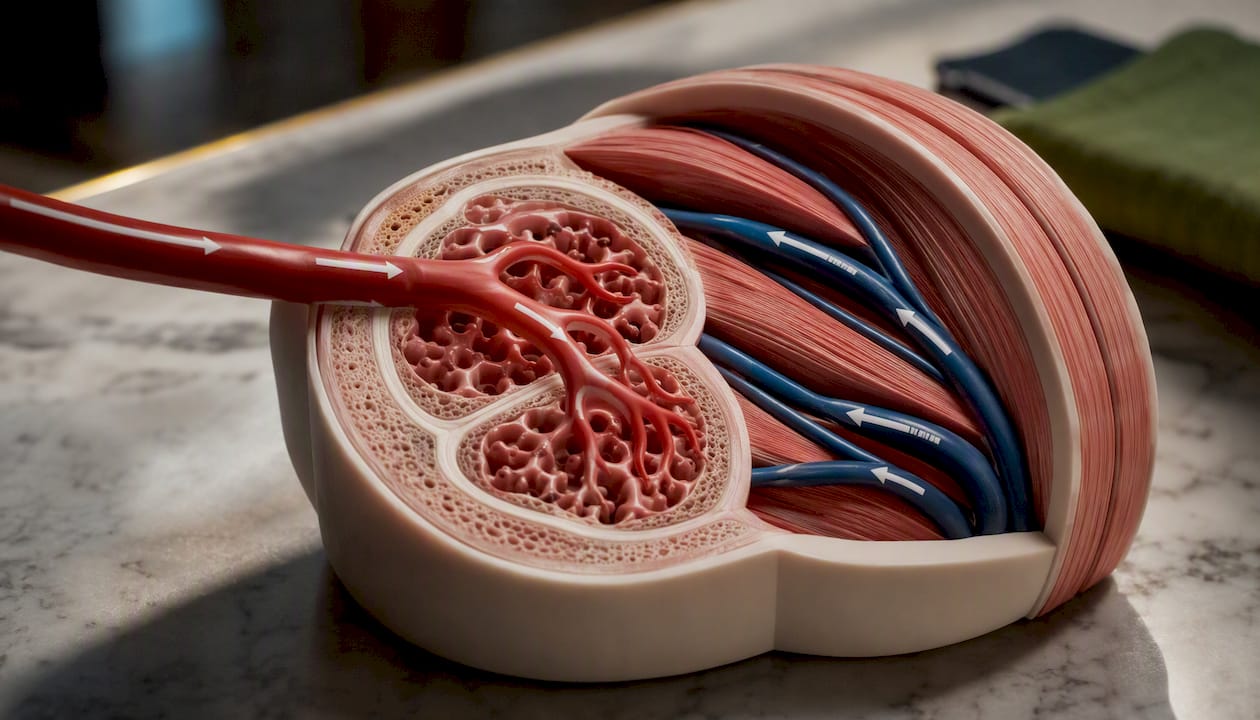
A review of erectile hydraulics describes this inflow-outflow balance directly: weak pelvic floor muscles let blood leak out of the penis almost as fast as it enters, even when arterial flow is perfectly normal. Strengthening those muscles closes that leak.
Here’s a straightforward routine:
- Find the right muscles by stopping your urine stream midflow once, just to identify the sensation. Don’t make this a regular practice, it’s a one-time locator exercise.
- Contract those muscles for 3 to 5 seconds, then release for the same count. That’s one rep.
- Build toward 30 to 40 reps a day, split into three or four short sessions rather than one long one.
- Progress by holding each contraction longer (up to 10 seconds) once the basic reps feel easy, usually after two to three weeks.
- Avoid the most common mistake: clenching your glutes, thighs, or abdomen instead of the actual pelvic floor. If your stomach is tightening, you’re doing it wrong.
The results aren’t trivial. Harvard Health’s review of nondrug approaches notes that pelvic floor exercises can rival medication for some men, particularly those whose main issue is maintaining rather than achieving an erection. That’s a meaningful claim: a muscle-training routine performing in the same range as a prescription drug for a subset of men.
Vacuum erection devices offer a mechanical assist for men who need more than muscle training alone. The device creates negative pressure that pulls blood into the penis, and a constriction ring at the base then traps it there, similar in principle to what a strong pelvic floor does naturally. Time limits matter: rings should stay on no longer than 30 minutes, and men on blood thinners should talk to a clinician before using one, since trapped blood combined with reduced clotting ability raises bruising and injury risk.
Pro Tip: Do your Kegel sets during downtime you already have, like waiting at red lights or during TV commercials. Consistency beats intensity here, and a routine you can sustain daily for months will outperform an aggressive routine you abandon after a week.
Do Supplements Really Improve Blood Flow to the Penis?
Some do, with real trial data behind them, but the evidence is early-stage and dosing matters. The best-studied combination is L-citrulline paired with trans-resveratrol, which have real trial support. A randomized, double-blind, placebo-controlled pilot trial tested this pairing in men who weren’t getting enough benefit from on-demand PDE5 inhibitors, and the results were notable.
In that trial, SHIM scores (a standard erectile function measure) improved significantly in the group taking the active supplement. That’s a shift from moderate dysfunction into a meaningfully better range, in men who had already tried and gotten limited results from standard medication.
Why citrulline over arginine, when both theoretically raise nitric oxide? Citrulline sidesteps a metabolic bottleneck. Oral arginine gets broken down by an enzyme called arginase in the gut and liver before much of it ever reaches the bloodstream. Citrulline bypasses that step entirely and converts to arginine later, deeper in the body, which is why citrulline supplementation improved endothelial function and muscle oxygenation in clinical testing, including measurable gains in flow-mediated dilation after just four weeks. Common doses in research range from 2.4 to 6 grams a day for general vascular support, with some exercise-focused studies using 6 to 10 grams.
Dietary nitrates work through a related but separate pathway. Beetroot juice, taken in concentrated form or as several servings of the whole vegetable, has been used in vascular research to raise circulating nitric oxide and support blood vessel relaxation, drawing on the same mechanism that makes leafy greens and beets useful in the diet section above.
A few supplements carry weaker evidence and deserve honest caution:
- Dark chocolate polyphenols show modest circulation benefits in small studies, nowhere near strong enough to treat dysfunction on their own
- Pomegranate extract has similar early, unconvincing signals
- Any supplement promising “instant” or “guaranteed” results should be treated skeptically regardless of ingredient list
Safety comes first with any of these. Nitric-oxide-boosting supplements can interact with nitrate medications and PDE5 inhibitors, and stacking multiple nitric-oxide pathways at once can drop blood pressure further than intended. Choose products that publish third-party lab testing and clear ingredient labeling, and if you’re taking prescription heart medication, a conversation with your clinician isn’t optional. Organicufuel’s Alpha Cactus formulation is one example of a product built around this kind of vascular-support ingredient profile.
What Medical Treatments Increase Blood Flow to the Penis?
When lifestyle changes and supplements aren’t enough, several medical options work directly on blood flow, each with a different mechanism, timeline, and risk profile.
Oral PDE5 inhibitors (sildenafil, tadalafil, vardenafil, avanafil) are the most common starting point. They work by blocking an enzyme that breaks down nitric oxide’s vasodilating signal, which keeps blood vessels relaxed longer and lets more blood into the penis during arousal. According to UCSF Health, these medications help roughly 70 to 80% of men who try them. They still require sexual stimulation to work, they’re not a switch that turns on automatically, and they carry a serious contraindication: combining them with nitrate medications (common in heart disease treatment) can cause a dangerous blood pressure crash. Anyone with unstable cardiac disease needs medical clearance before starting one. Our breakdown of sildenafil, tadalafil, and vardenafil covers the differences between them in more detail.
Penile injections, using alprostadil alone or combinations known as bimix or trimix, deliver medication directly into the erectile tissue. They act fast, often within 5 to 20 minutes, and work even for men whose nerve signaling is impaired, since they bypass the arousal pathway entirely. The main risk is priapism, an erection lasting longer than four hours, which needs emergency treatment to prevent tissue damage.
Vacuum erection devices and constriction rings provide a nonpharmacologic option, and per Cleveland Clinic, they’re a legitimate medical tool when medications are ineffective or unwanted, not just a mechanical stopgap. Safe use means limiting ring time to 30 minutes and avoiding the device entirely if you’re on blood thinners without clinician guidance.
Low-intensity shockwave therapy (LiSWT) aims to stimulate new blood vessel growth in penile tissue using targeted sound waves. Evidence quality is still developing, current research shows promise but isn’t as robust as PDE5 inhibitor data, and benefits typically take two months or longer of regular sessions to appear, if they appear at all.
For men who don’t respond to any of the above, penile prosthesis surgery remains a last-resort option, offering a mechanical solution when the vascular and pharmacologic routes have been exhausted.
When Should You See a Doctor About Erection Problems?
Some symptoms need attention faster than others. Sudden, complete loss of erections (as opposed to a gradual decline), severe pain during an erection, priapism, or chest pain or pressure during sexual activity are red flags that warrant prompt medical evaluation, not a wait-and-see approach.
For less urgent but persistent issues, a standard diagnostic workup usually includes:
- Blood pressure check, since hypertension damages the same vessels erections depend on
- Fasting glucose or HbA1c to screen for diabetes, a leading cause of vascular and nerve-related erectile dysfunction
- A lipid panel to assess cholesterol’s role in arterial narrowing
- Testosterone testing to rule out hormonal causes
- Penile Doppler ultrasound, which directly measures blood flow into the penis and can distinguish a vascular problem from a nerve or psychological one
The cause determines the specialist. Vascular issues often stay with a primary care doctor or urologist; suspected nerve damage, especially after pelvic surgery or injury, may need a neurologist; and cases where anxiety or depression seem to be the primary driver benefit from involving a therapist alongside medical care. A reasonable rule of thumb: give lifestyle changes and supplements 8 to 12 weeks before expecting a clinically meaningful shift, and if nothing has moved by then, it’s time to revisit the plan with a professional rather than keep waiting.
Publisher Note: How Organicufuel Fits an Evidence-Based Plan
Organicufuel formulates its supplements as organic herbal blends, lab-tested in the US for safety and efficacy, and positioned to work alongside the lifestyle and medical strategies covered above, not as a replacement for them.
Our formulations draw on ingredient categories with published vascular research behind them, including nitric-oxide-supporting botanicals discussed earlier in this guide.
If you take nitrate medications, have unstable cardiovascular disease, or are on prescription drugs for blood pressure or erectile dysfunction, talk to your clinician before adding any supplement, including ours. Organicufuel backs its products with a 100% money-back guarantee.
What This Guide Gets Right That Most Advice Misses
Most erectile health content treats this as an embarrassment to fix quietly and quickly. That framing does men a disservice. Improving erection blood flow is fundamentally a cardiovascular project, and the timeline reflects that: expect weeks to months of consistent lifestyle work before erectile function shifts noticeably, while medications act in hours. Nobody wants to hear that, but pretending otherwise sets men up to quit after two weeks of exercise and conclude none of it works.
The upside is bigger than the bedroom. If walking, diet changes, and pelvic floor training improve your erections, you’ve likely just improved your heart disease risk too. Talk to a clinician before layering supplements onto prescription medications. That single conversation prevents most of the real risk in this whole approach.
— Organic
Where the Bad Boy Bundle Fits Into Your Plan
If you’ve already started walking more, eating more beets and berries, and working through your pelvic floor routine, the Bad Boy Bundle is built to support that same vascular and vitality foundation, not replace it. It’s formulated with organic ingredients lab-tested for safety, positioned as a complementary layer for stamina and drive rather than a standalone fix. That’s the honest pitch: no synthetic shortcuts, no overnight promises, just a natural option designed to work alongside the exercise and diet changes already covered in this guide.
Organicufuel’s full product range, including Alpha Cactus and other formulations, backs every purchase with a 100% money-back guarantee, so trying it doesn’t mean committing blind. As always, if you take nitrates, blood pressure medication, or have a diagnosed heart condition, check with your clinician before adding any new supplement to your routine. From there, the next step is simple: browse the collection, pick the formula that matches where you are in your plan, and start with the lifestyle habits already in motion.
This article is general information, not a substitute for advice from a qualified doctor. Consult a qualified healthcare professional about your own circumstances before acting on anything here.
Sources

- Nondrug approaches to improve erectile function — Harvard Health Publishing
- Randomized pilot study of L-citrulline and trans-resveratrol for erectile dysfunction — PubMed
- Citrulline supplementation improves endothelial function and muscle oxygenation — PMC
- Erectile Dysfunction — UCSF Health
- Erectile Dysfunction (ED): Causes, Diagnosis & Treatment — Cleveland Clinic
FAQ
How Can I Increase My Erection Hardness?
The most reliable combination is regular aerobic exercise, daily pelvic floor training, and a diet built around nitrate-rich vegetables and flavonoid-rich fruit, since all three directly support the blood flow mechanics behind a firm erection. Supplements like L-citrulline paired with trans-resveratrol, which have real trial support showed measurable improvement in a controlled pilot trial for men with an inadequate response to medication alone.
Why Can’t I Get 100% Hard?
Incomplete hardness usually points to either insufficient arterial inflow, weak pelvic floor muscles that let blood drain out too fast, or an underlying vascular issue like early-stage high blood pressure or high cholesterol. A penile Doppler ultrasound can pinpoint which mechanism is at play, and the fix differs depending on whether the problem is inflow, outflow, or a nerve-related trigger issue.
What Gives the Strongest Erection?
No single fix works alone. The strongest, most durable results come from combining consistent aerobic exercise, pelvic floor training, and a heart-healthy diet with medical options like PDE5 inhibitors when needed, since these medications help roughly 70 to 80% of men but work best on top of a vascularly healthy body, not instead of one.
Why Am I Only Getting Semi-Hard?
Partial erections often signal borderline blood flow, enough arterial inflow to start the process but not enough sustained pressure to complete it, which frequently traces back to a weak pelvic floor or early vascular changes. Building pelvic floor strength through a consistent Kegel routine and addressing risk factors like smoking or poor diet often improves this within eight to twelve weeks, though persistent cases deserve a clinical evaluation.

Comments (0)
There are no comments for this article. Be the first one to leave a message!