
Start with water and a protein-based snack before you reach for anything else. From there, match the alternative to your goal: matcha or yerba mate if you still want some caffeine, chicory or rooibos if you want none, and rhodiola or ashwagandha if you’re building toward calmer, steadier focus over several weeks rather than an instant jolt.
TL;DR:
- Drinking water and engaging in brief physical activity can restore alertness and improve mood faster than any beverage, especially in cases of dehydration.
- Matcha and yerba mate deliver caffeine similar to coffee but are often smoother and less likely to cause jitters, with effects taking roughly an hour to fully manifest.
- Adaptogens like rhodiola and ashwagandha require several weeks of regular use before noticeable benefits for fatigue and stress support emerge.
- Combining hydration, protein-rich meals, and short movement breaks addresses root causes of fatigue more effectively than relying solely on herbal supplements or caffeine alternatives.
- Always check labels for actual caffeine content and consult a healthcare professional before introducing herbal supplements, especially for those with underlying health conditions or on medications.
Table of Contents
- What Are the Best Natural Caffeine Alternatives Right Now?
- Why Do These Alternatives Feel Different From Caffeine?
- Who Should Be Careful With These Options, and What to Check on the Label
- A One-Week Routine to Test Your Own Energy Without the Crash
- Where Organicufuel Stands on the Evidence
- What This Guide Gets Right That Most Caffeine Advice Misses
- Alpha Cactus as an Adjunct, Not a Substitute for Habits
- Sources
- FAQ
What Are the Best Natural Caffeine Alternatives Right Now?
The fastest fix costs nothing and takes thirty seconds. Dehydration alone can blunt concentration and mood, so a large glass of water often does more for a foggy afternoon than most people expect, according to MedlinePlus. Pair that with a two-minute walk or a set of stairs, and you’ve covered the two cheapest, fastest levers available. The CDC notes that even brief bouts of physical activity support brain health and alertness, which is why a short walk beats another cup of coffee more often than people assume.
Once the immediate fix is handled, the beverage aisle offers real options with different caffeine profiles:
- Matcha — delivers real caffeine, often in a range that overlaps with brewed coffee, but the L-theanine in green tea tends to smooth out the spike into something closer to calm focus. Harvard Health puts green tea around 28 mg of caffeine per 8-ounce serving, with matcha running higher depending on preparation, sometimes close to coffee levels; for detailed caffeine amounts, see this przewodnik po zawartości kofeiny.
- Yerba mate — another caffeine-containing option that can approach coffee-level amounts; useful if you’re cutting back gradually rather than quitting outright.
- Yaupon tea — a lesser-known North American holly that carries caffeine along with antioxidants, and works as a mid-tier swap for people not ready to go fully caffeine-free.
- Chicory root coffee — brewed and served like coffee but naturally caffeine-free, which makes it the closest thing to a ritual replacement for people trying to break the habit rather than the chemical dependence.
- Rooibos — a South African red tea, caffeine-free, mild, and easy to drink black or with milk.
Healthline’s roundup of coffee alternatives covers serving suggestions for each of these, and it’s worth checking if you want recipe ideas beyond a plain mug.
Herbal supplements work on a slower timeline than any beverage. Rhodiola and ashwagandha are the two most studied adaptogens for fatigue, though the evidence base is smaller and less consistent than most marketing implies. A PubMed review found modest benefits for herbs like rhodiola and cordyceps on fatigue and performance, but effect sizes were small and study quality varied widely. Maca root has a longer folk history for stamina and libido than it has clinical trial data, so treat it as a supporting player rather than a headline act.
Functional foods and drinks round out the list, and they matter more than most caffeine guides admit:
- Golden milk (turmeric, warm milk, black pepper) offers an anti-inflammatory ritual that’s genuinely soothing before bed or mid-afternoon.
- Kombucha provides a small amount of natural fizz and probiotics, though caffeine content varies by brand since it’s often brewed from tea.
- Apple cider vinegar, diluted in water before a meal, is popular for blood sugar support, though it won’t produce the alertness effect people sometimes expect from it.
A few practical notes before you build a routine around any of this: always check the label for actual caffeine content in milligrams rather than trusting the marketing copy, favor products with third-party testing, and skip the sugary bottled versions of matcha or kombucha that turn a smart swap into a dessert.
Why Do These Alternatives Feel Different From Caffeine?
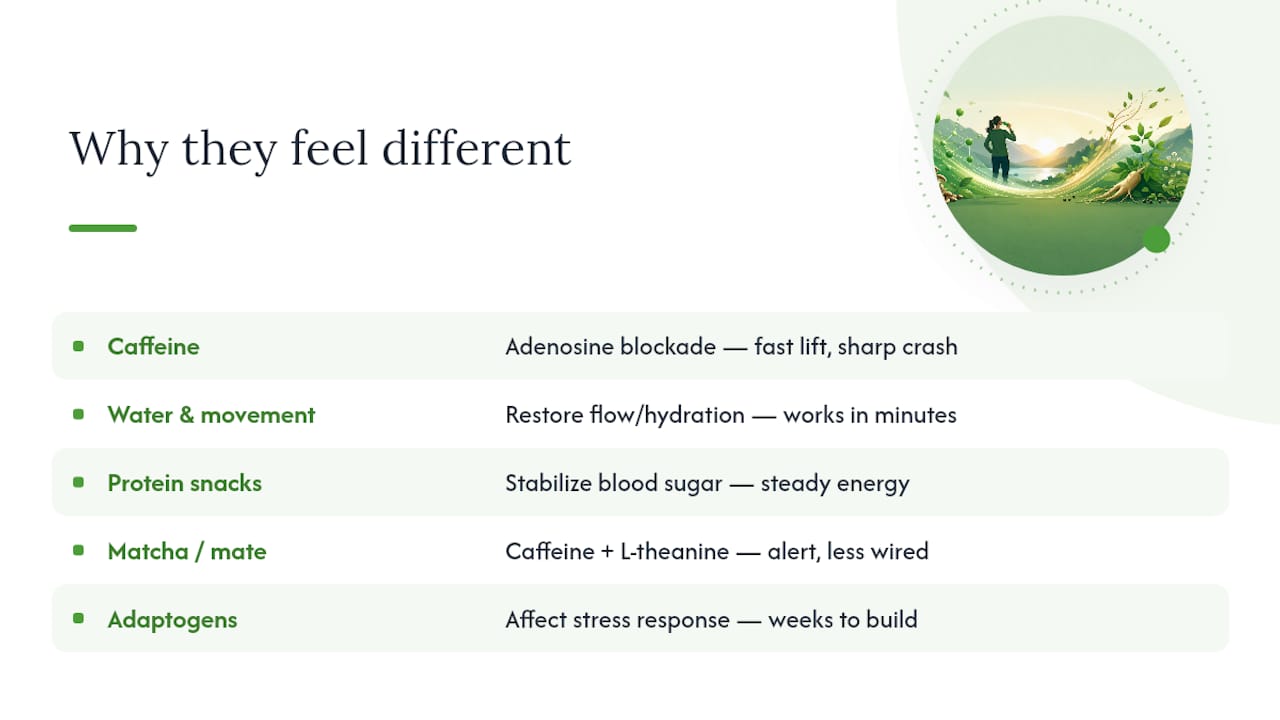
Caffeine works by blocking adenosine receptors in the brain, which is why it produces a sharp, fast lift followed by an equally sharp crash once the blockade wears off. Most natural alternatives don’t work that way at all. Water and movement restore normal blood flow and hydration status rather than stimulating anything, which is why the effect feels calm instead of jittery. Protein-and-produce snacks stabilize blood sugar, avoiding the swings that make people reach for a second coffee by 2 p.m.
Matcha and yerba mate still deliver caffeine, but the L-theanine in tea leaves modulates the stimulant effect into something users typically describe as alert rather than wired. Adaptogens work on an entirely different axis. Rhodiola and ashwagandha are believed to interact with the body’s stress response system rather than the central nervous system directly, which is why their effects build gradually instead of hitting all at once. That’s also why a PubMed / NCBI review found that adaptogen research often lacks the kind of large, immediate-effect trials caffeine studies rely on. Timing follows the same logic: water and a short walk act in minutes, a cup of matcha acts within the hour, and rhodiola or ashwagandha need weeks of consistent use before most people notice a difference. Lasting energy, according to Mayo Clinic Press, comes primarily from sleep, exercise, stress management, and nutrition, not from any single ingredient swapped in for coffee.
Who Should Be Careful With These Options, and What to Check on the Label
Not every natural alternative is risk-free for every person, and caffeine-containing options in particular deserve the same label scrutiny you’d give coffee itself. The FDA’s guidance on caffeine flags certain groups, including pregnant people and those with underlying heart conditions, as needing tighter limits and closer label attention.
Before adding anything new to your routine, run through this checklist:
- If you take prescription stimulants, heart medication, or anxiety medication, ask a clinician before adding adaptogens or high-caffeine teas.
- Pregnant or breastfeeding individuals should treat yerba mate, matcha, and yaupon with the same caution as coffee, since caffeine content can rival a regular cup.
- Adaptogens require a loading period, often several weeks, and the research on their mechanisms is still thinner than caffeine research, so don’t expect immediate results.
- Read labels for exact caffeine milligrams rather than vague terms like “energizing blend,” and favor products that disclose third-party testing.
- Avoid proprietary blends that hide individual ingredient doses behind a single “blend” total. It’s a red flag for both caffeine content and adaptogen dosing.
Anyone managing a chronic condition or currently on medication should check how herbal supplements interact with existing prescriptions before layering in something new, since even “natural” ingredients can compound with certain drugs.
A One-Week Routine to Test Your Own Energy Without the Crash
Run this sequence for seven to fourteen days before judging whether it’s working. Energy shifts are subjective, so track how you feel each afternoon rather than expecting an overnight transformation.
- On waking: drink 12 to 16 ounces of water before anything else, then eat a protein-and-produce breakfast (eggs and fruit, or Greek yogurt and berries).
- Mid-morning: if you want some caffeine, have matcha; if you’re going fully caffeine-free, brew chicory instead. Either way, keep it to one cup.
- Late morning: take a five to ten minute movement break, ideally outside for natural light exposure, which helps anchor your circadian rhythm for the rest of the day.
- Early afternoon: a small protein snack (nuts, cheese, or hummus) prevents the blood-sugar dip that usually triggers a second caffeine craving.
- Mid to late afternoon: switch to rooibos, golden milk, or plain water. Skip anything caffeinated after this point so it doesn’t interfere with sleep.
If you’re currently a heavy coffee drinker, taper over that same one to two week window rather than quitting outright, since abrupt caffeine withdrawal can cause headaches and fatigue that make the whole experiment feel like it failed.
Pro Tip: Replace the ritual before you replace the chemical. Brew chicory in your usual mug at your usual time. The hand-to-mouth habit and the warmth do a lot of the psychological work that caffeine gets credit for.
Where Organicufuel Stands on the Evidence
Some herbal supplement brands formulate products around ingredients tested in US labs; this article reflects an evidence-first approach: lifestyle changes come first, supplements are a supporting tool, not a replacement for sleep, hydration, or real food.
Sustainable energy is built, not bought. The habits in this guide, hydration, movement, sunlight, and steady nutrition, do more heavy lifting than any single bottle on a shelf, and no supplement brand should claim otherwise.
What This Guide Gets Right That Most Caffeine Advice Misses
Most “caffeine alternatives” content treats the topic as a beverage swap: trade your coffee for matcha and call it done. That misses the actual lever. Sleep debt, dehydration, and blood sugar swings cause most of the afternoon crashes people blame on caffeine withdrawal, and no tea or adaptogen fixes a bad sleep schedule.
The conventional advice also oversells adaptogens as fast substitutes. They’re not. Rhodiola and ashwagandha ask for weeks of patience, and anyone expecting a rhodiola capsule to replace an espresso by Tuesday will quit by Thursday, convinced “natural” doesn’t work. It works differently, on a slower curve, and that distinction gets buried in most listicles chasing quick answers.
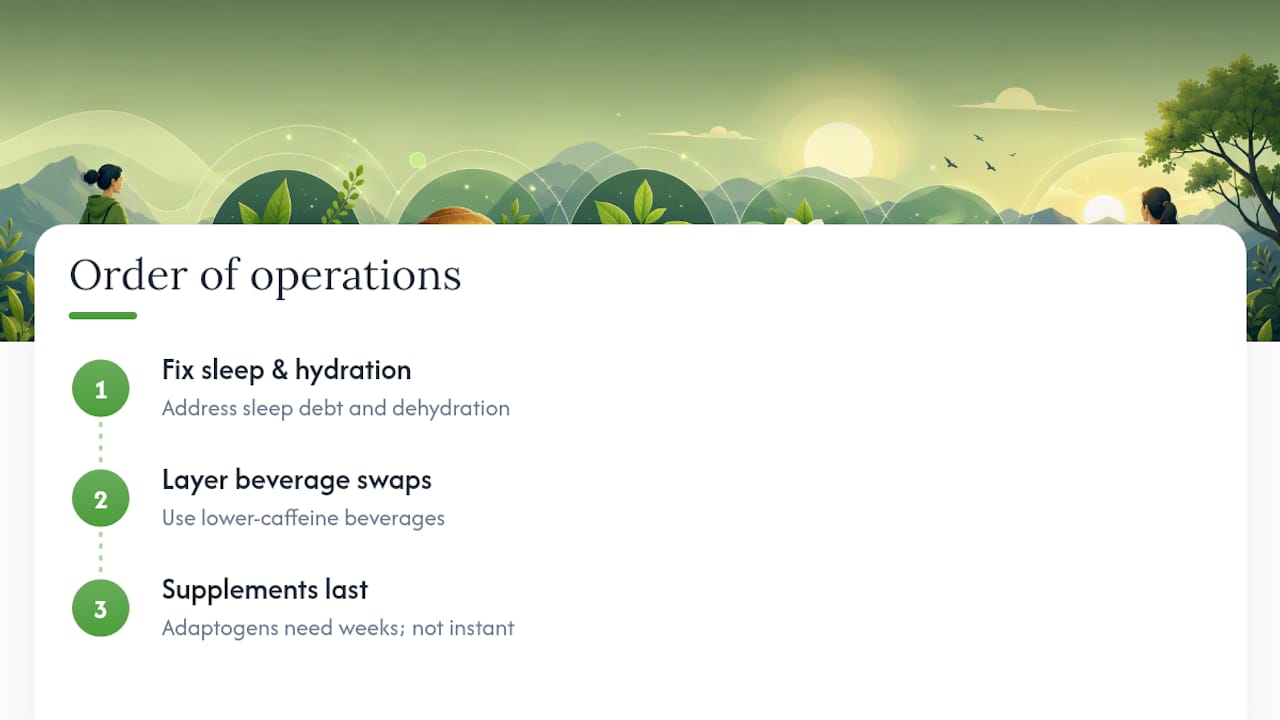
If you take one thing from this guide, take the order of operations: fix hydration and sleep first, layer in beverage swaps second, and treat herbal supplements as the third step, not the first. Skipping straight to a supplement while running on five hours of sleep and a dehydrated brain was never going to work, no matter what’s in the capsule.
— Organic
Alpha Cactus as an Adjunct, Not a Substitute for Habits
If you’ve tightened up sleep, hydration, and meal timing and still want extra support for stamina and vitality, Alpha Cactus is a tested option for that next layer. It’s an herbal formula designed for natural performance and vitality support, not a caffeine substitute and not a shortcut around the basics covered above.
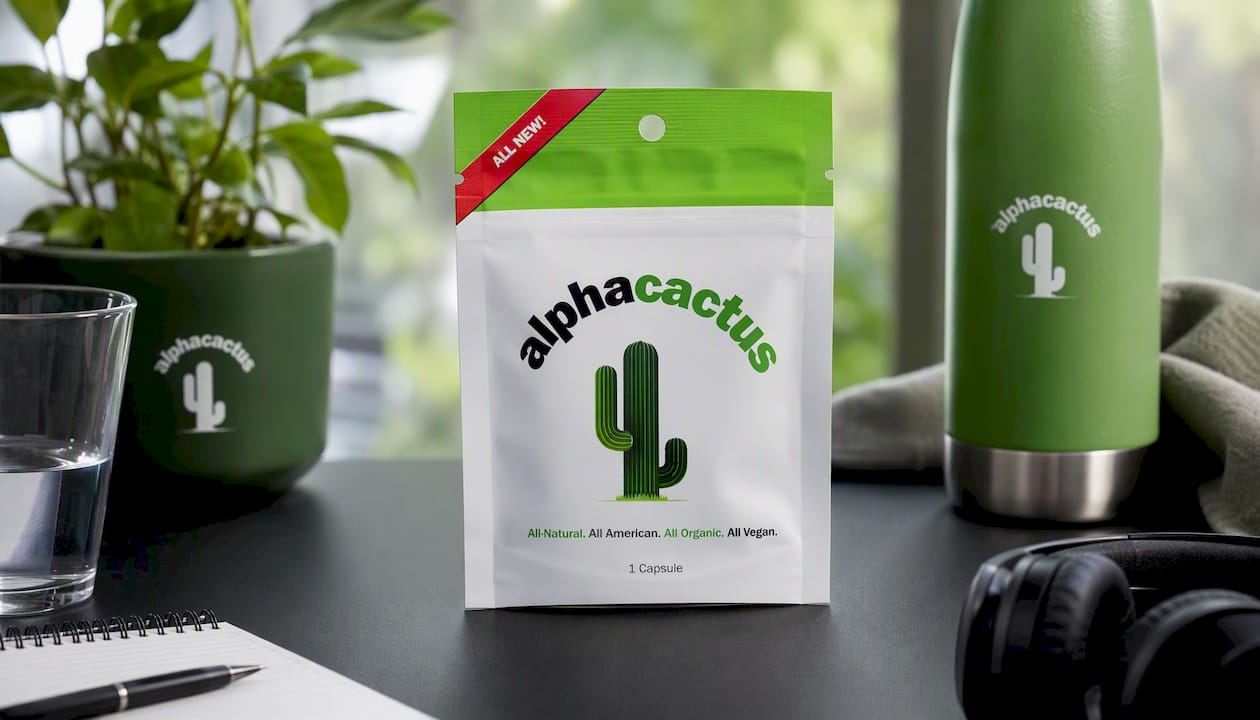
Alpha Cactus fits into the routine outlined earlier as an afternoon or evening addition once the fundamentals are in place, similar to how BioSync-XT supports testosterone as a complementary formula rather than a standalone fix. Some brands back their products with a money-back guarantee, so trying such supplements may carry no real downside if they don’t fit your routine. If you’ve already got water, movement, and sleep dialed in and want to see what a lab-tested herbal formula adds, check out Alpha Cactus and read the full ingredient breakdown before your next order.
Sources
- Energy-boosting coffee alternatives: What to know
- Spilling the beans: How much caffeine is too much? - FDA
- Adaptogens: facts and mechanisms (example review)
FAQ
What Is the Healthiest Alternative to Caffeine?
Water paired with a protein-rich meal and consistent sleep does more for sustained energy than any single beverage, according to Mayo Clinic Press. Among beverages, caffeine-free options like chicory and rooibos are the gentlest on the body.
What Can People With ADHD Use Instead of Caffeine?
There’s no single approved substitute, and anyone managing ADHD on medication should talk to a clinician before adding stimulant-like herbs such as yerba mate or high-dose adaptogens. Hydration, protein-timed meals, and short movement breaks are safe starting points that don’t risk medication interactions.
What Can I Take Instead of Caffeine to Stay Awake?
For an immediate effect, water and a brisk walk work faster than most supplements. For a gentler lift with some caffeine still included, matcha or yerba mate are reasonable middle-ground choices, per Harvard Health.
What Is the Best Natural Form of Caffeine?
Matcha and yerba mate are the most concentrated natural sources outside of coffee itself, with caffeine levels that can rival a regular cup depending on preparation. Both also carry compounds like L-theanine that tend to soften the jittery edge typical of straight coffee.
Do Adaptogens Work Right Away Like Caffeine Does?
No. Adaptogens like rhodiola and ashwagandha typically need weeks of consistent use before users notice steady effects on fatigue, unlike the near-immediate lift from caffeine.

Comments (0)
There are no comments for this article. Be the first one to leave a message!